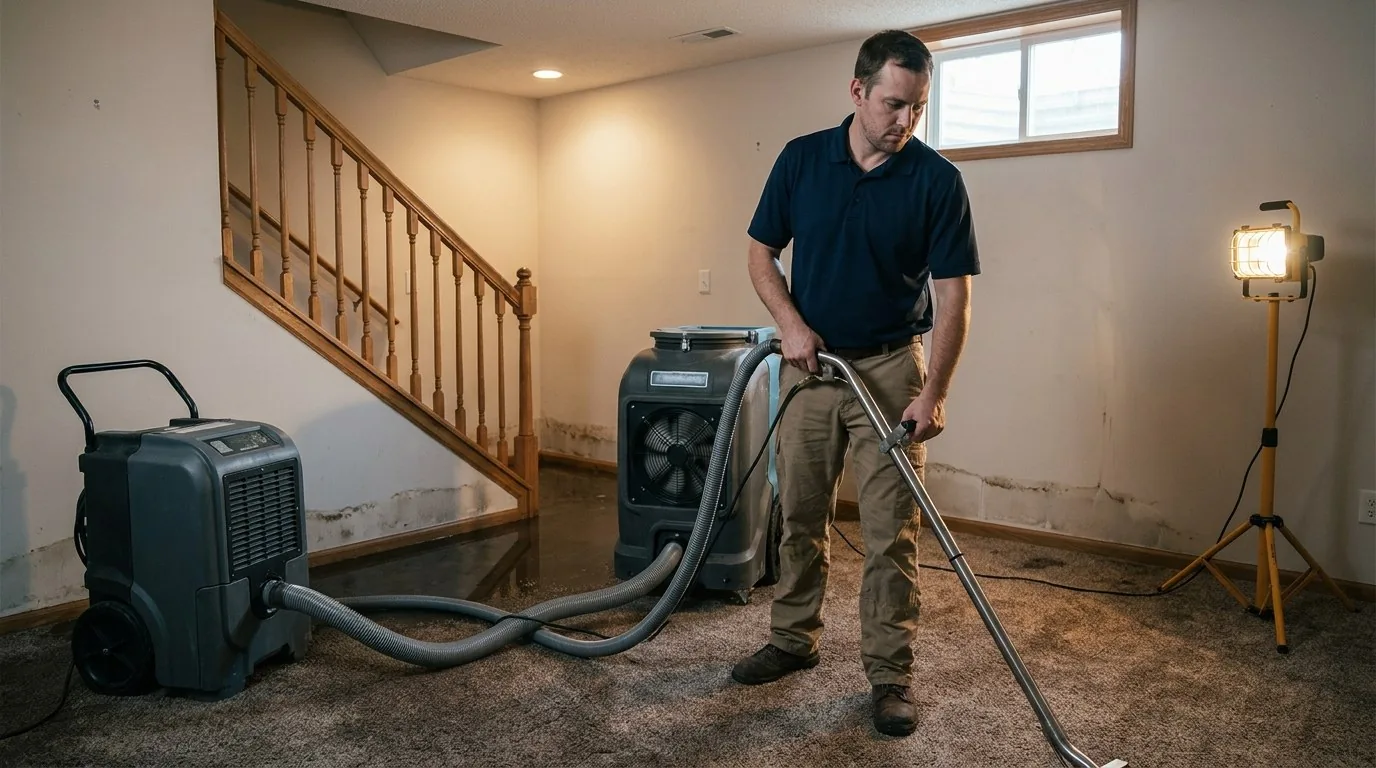
Emergency Water Removal
When water is actively spreading, extraction is the first priority — before drying, before repairs, before anything else. This is what that first response typically looks like.
What Emergency Extraction Involves
Extraction equipment ranges from portable wet-vacs for small areas to truck-mounted extraction units capable of pulling large volumes of water quickly from carpet, padding, and hard flooring. The goal at this stage isn't to fully dry the space — it's to remove bulk water fast enough that it stops migrating into walls, subflooring, and adjacent rooms.
Carpet and padding usually need to be pulled back or removed entirely if water has been sitting for any length of time, since padding holds moisture that surface extraction alone can't reach. Hardwood flooring presents its own challenge — water trapped underneath can cause cupping or buckling even after the surface looks dry.
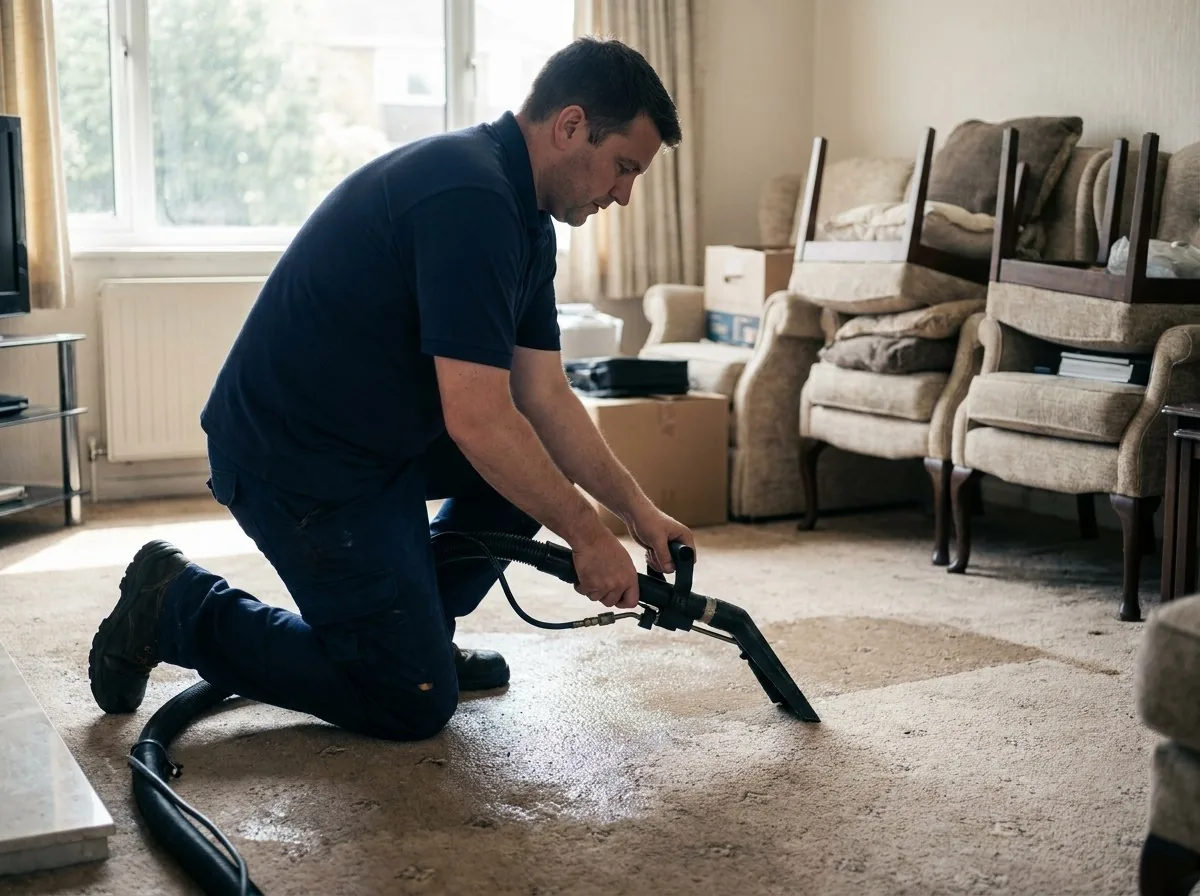
What Happens Immediately After Extraction
Once bulk water is removed, air movers and dehumidifiers go up to begin structural drying. Moisture readings are taken to map how far the water traveled — this often extends further into a wall or under flooring than what's visible. That data determines what actually needs to come out versus what can dry in place. Read more in our full restoration process guide.
If standing water is anywhere near an outlet, appliance, or electrical panel, don't enter the area until power to that section has been shut off — ideally at the breaker, not just the outlet. If you're unsure, wait outside the affected area rather than risk it.
Frequently Asked Questions
This depends on the responding contractor's current workload and your location within Central Indiana. Call IndyWaterHelp to confirm the earliest available response for your address and the steps to take while waiting.
If it's safe and you're physically able to, moving furniture and valuables out of standing water can help limit damage. Don't strain yourself or risk injury doing it — a restoration crew can move heavier items once they arrive.
Water actively spreading right now?
Call to confirm the earliest available response.