Water Damage Restoration in Indianapolis & Central Indiana
What restoration actually involves, the most common causes we see across Marion and Hamilton County, and how to get help routed to your property.
What Water Damage Restoration Actually Involves
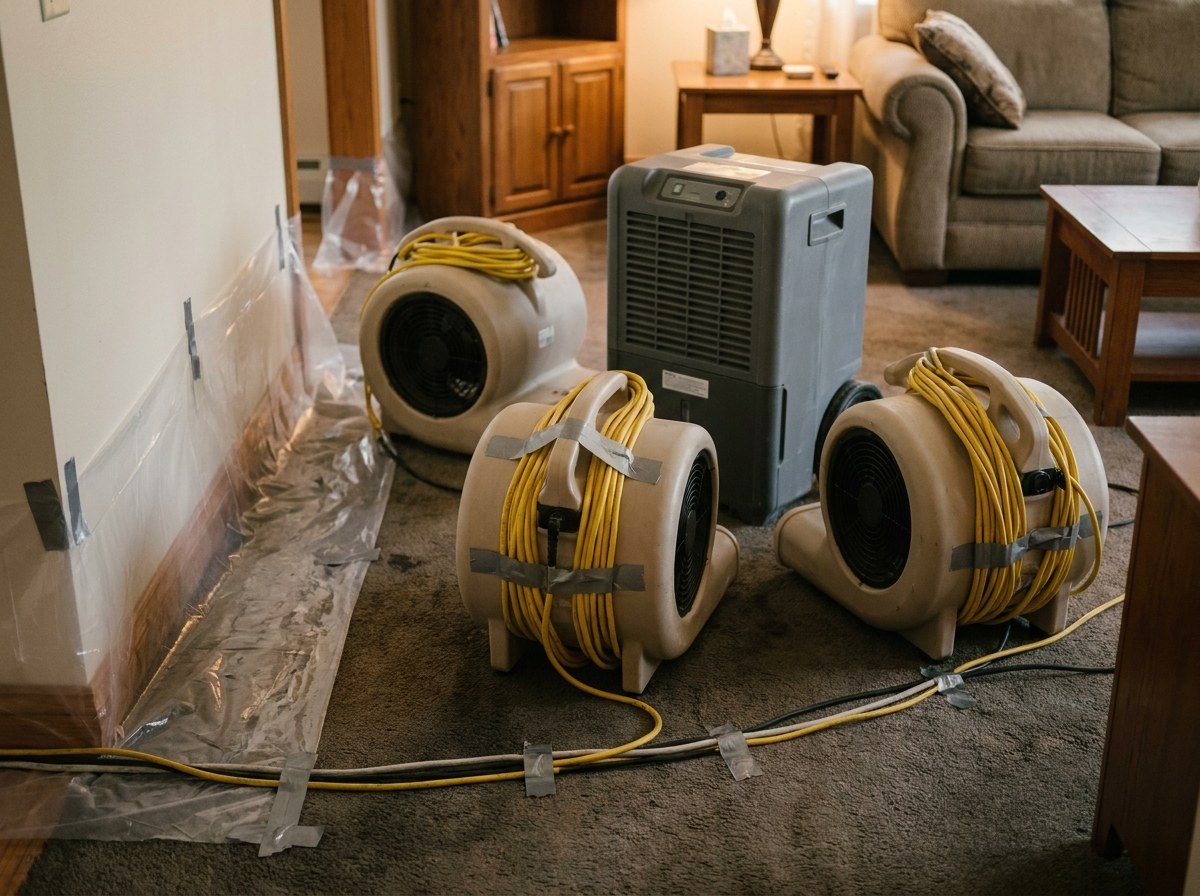
Restoration and simple water removal aren't the same thing. Extraction gets standing water off the floor. Restoration is the full process: assessing how far moisture has traveled into walls and subflooring, removing standing water, setting up monitored drying equipment, tracking moisture levels until materials reach a dry standard, and then coordinating whatever repairs are needed to put the space back together.
Skipping steps in that process is usually what leads to problems later — carpet that looks dry on the surface but has saturated padding underneath, or drywall that dries out but leaves elevated moisture trapped in the wall cavity where mold can develop unnoticed for weeks.
The typical process
- Assessment — identifying the water source, the category of water (clean, gray, or black), and how far it has traveled using moisture meters and, when needed, thermal imaging.
- Extraction — pumping or vacuuming out standing water using extraction equipment rated for the volume involved.
- Structural drying — positioning air movers and industrial dehumidifiers to dry affected materials in place where possible.
- Monitoring — daily moisture readings until walls, subflooring, and framing return to a normal moisture range.
- Repair & reconstruction — replacing drywall, flooring, insulation, or trim that couldn't be dried in place.
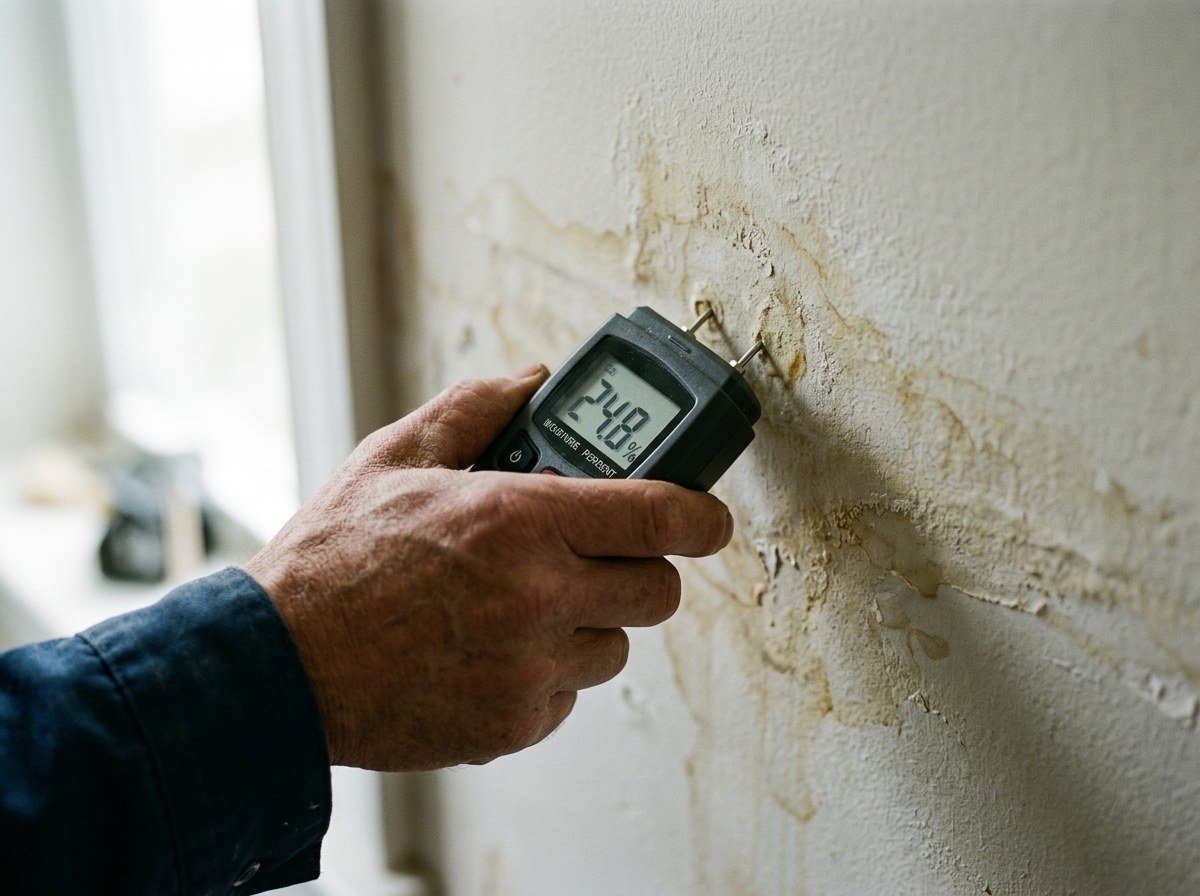
A burst supply line is typically clean water. A washing machine overflow or dishwasher leak is gray water. Sewage backup is black water and requires contaminated-water handling and sanitation protocols — it's not a job for household cleanup, regardless of how the space looks once the water is gone.
Appliance Leaks
Dishwasher supply lines, washing machine hoses, and refrigerator water lines are common sources of slow, sometimes unnoticed leaks that can saturate flooring and cabinetry over time. Because these leaks are often gradual rather than sudden, they're also the type most likely to raise questions with insurance — see our insurance guide for what that distinction means for a claim.
Roof Leaks & Ceiling Water Damage
Roof leaks tend to show up as a stain that grows slowly, which makes it easy to underestimate how much moisture is actually sitting in the attic insulation and ceiling drywall above. By the time water is visibly dripping, insulation has often been wet for a while — it usually needs to be assessed and, in many cases, replaced.
Water Heater Leaks & Failures
Water heaters are usually installed in utility closets, basements, or garages — spaces where a slow leak or full tank failure can go unnoticed until flooring or drywall is already saturated. A full tank failure releases 30–50 gallons at once, which is enough to spread across an entire basement level quickly.
Storm Water Intrusion
Heavy rainfall across Central Indiana can overwhelm gutters, grading, and window wells faster than most homeowners expect, particularly on properties where downspouts discharge too close to the foundation. See our Indianapolis service area page for how local soil conditions make this worse in parts of Marion County specifically.
Frequently Asked Questions
Most residential drying jobs run three to five days, though this varies significantly based on how much material was affected, humidity, and how quickly extraction began. A restoration professional will monitor moisture daily rather than working off a fixed schedule.
Mitigation is the extraction and drying phase — stopping the damage from getting worse. Reconstruction is the repair phase that follows — replacing drywall, flooring, or trim that couldn't be saved. They're often handled by the same company but represent two distinct stages of the project.
For very minor, small-area leaks caught immediately, consumer equipment can help. For anything beyond a small spot, household fans and dehumidifiers aren't sized to dry wall cavities and subflooring the way commercial equipment is, and drywall or flooring can look dry on the surface while trapping moisture underneath.
For a deeper look at any of these topics, visit our full resource library — including drying timelines, mold risk, hidden damage signs, and what actually drives restoration cost.
Ready to get a response started?
Describe your situation and we'll route it to a local restoration professional.
Specific help for the way water damage actually happens
Explore targeted guidance for ceilings, crawl spaces, appliances, floors, businesses, and nearby communities.