Basement Flood Cleanup
Basement flooding is the single most common water damage call across Marion and Hamilton County — and the reasons behind it differ more than most homeowners realize.
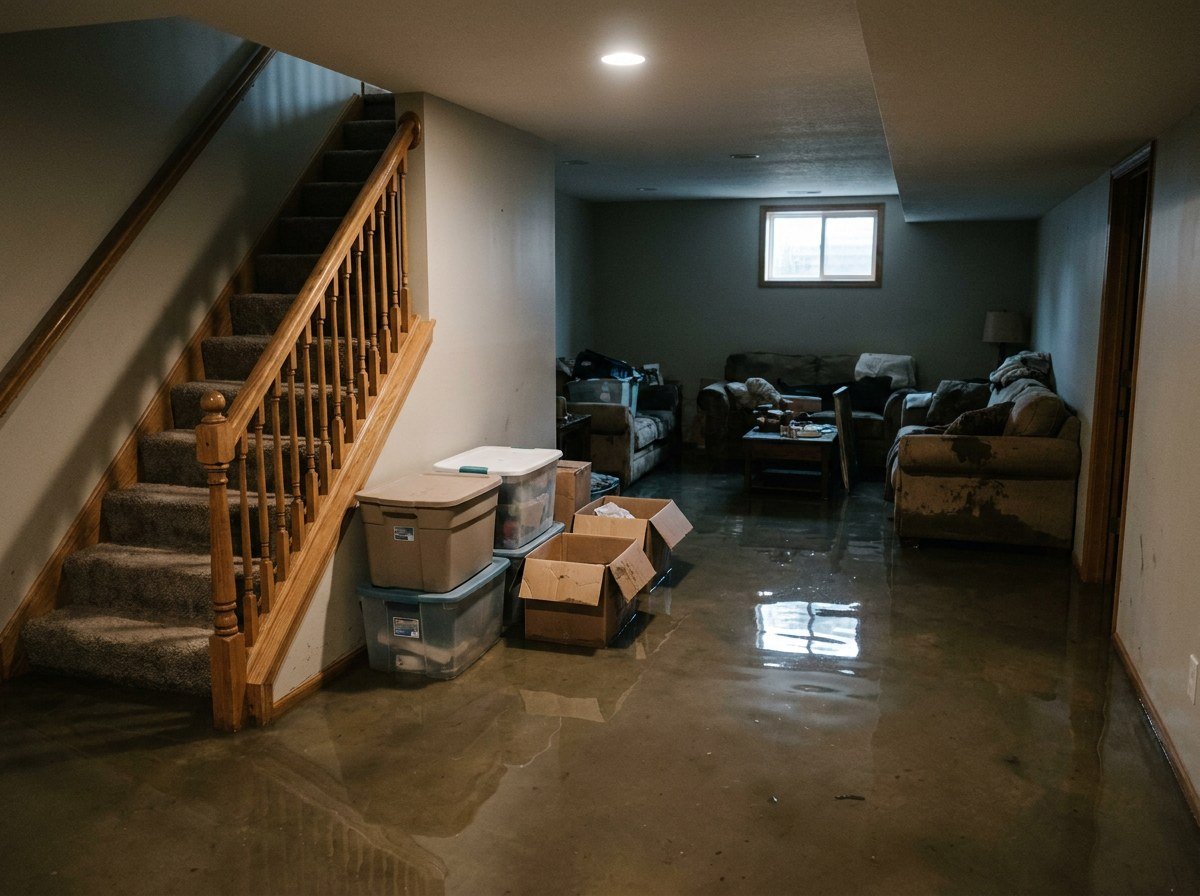
Why Indianapolis-Area Basements Flood
Much of Marion County sits on dense, clay-heavy soil that drains slowly. When the ground becomes saturated during heavy rain, water pools around foundations instead of soaking away, building hydrostatic pressure against basement walls until it finds a path through cracks, joints, or porous block. Add finished basements — standard in most Indianapolis-area homes — and even a modest amount of water intrusion means carpet, drywall, and stored belongings are directly in its path.
The mechanism is different in Hamilton County's newer subdivisions. Rapid development in Fishers, Carmel, Noblesville, and Westfield sometimes means basements sit on poorly compacted fill soil, and neighborhood grading changes can eliminate natural drainage paths that used to carry water away during heavy storms. See our Carmel service area page for more on how that plays out there specifically.
Sump Pump Failure
A sump pump is only as reliable as its power source and its pit. The most common failure pattern is simple: a summer thunderstorm knocks out power at exactly the moment the pump is working hardest, and a basement that's been dry for years floods within hours. Battery backup systems address this, but plenty of homes don't have one installed. A clogged or undersized pump can fail even with power intact if inflow outpaces what the pump can move.
If your basement flooding came from the river itself rather than a pump or drainage failure, the distinction matters for your insurance claim — see our water damage vs. flood damage guide.
Combined Sewer Overflow in Older Neighborhoods
Parts of inner Indianapolis — including neighborhoods like Irvington, Fountain Square, and the near-Eastside — are served by a combined sewer system that carries stormwater and sewage through the same pipes. During heavy rain, that system can become overwhelmed, and the backup can push into basements through floor drains. Citizens Energy Group's DigIndy deep tunnel project is a multi-billion-dollar effort to reduce these overflows, but it's an ongoing, decades-long build-out — not something that's eliminated the risk yet. If your basement flooding smells like sewage rather than just rainwater, treat it as a sewage backup, not a standard water intrusion.
Don't walk into standing water in a finished basement without shutting off power to that level first, if the panel is accessible without wading through the water. If it's not accessible safely, stay out and wait for help.
Frequently Asked Questions
It depends heavily on how long water was sitting and whether it was clean groundwater or contaminated sewage. Clean water caught quickly often allows framing and some flooring to be dried in place. Drywall below the waterline in a finished basement is more often removed regardless, since it wicks moisture and can trap mold behind it.
Many homeowners do, precisely because power outages during storms are what cause a lot of these failures in the first place. That's a conversation worth having with a plumber or your restoration contact once the immediate cleanup is handled.
It depends on the cause. Sump pump failure and sewer backup are commonly excluded from standard policies unless you've added specific endorsements for them. Groundwater flooding typically requires separate flood insurance. See our insurance guide for more detail.
Basement flooding right now?
Tell us what's happening and we'll route it to a local responder.