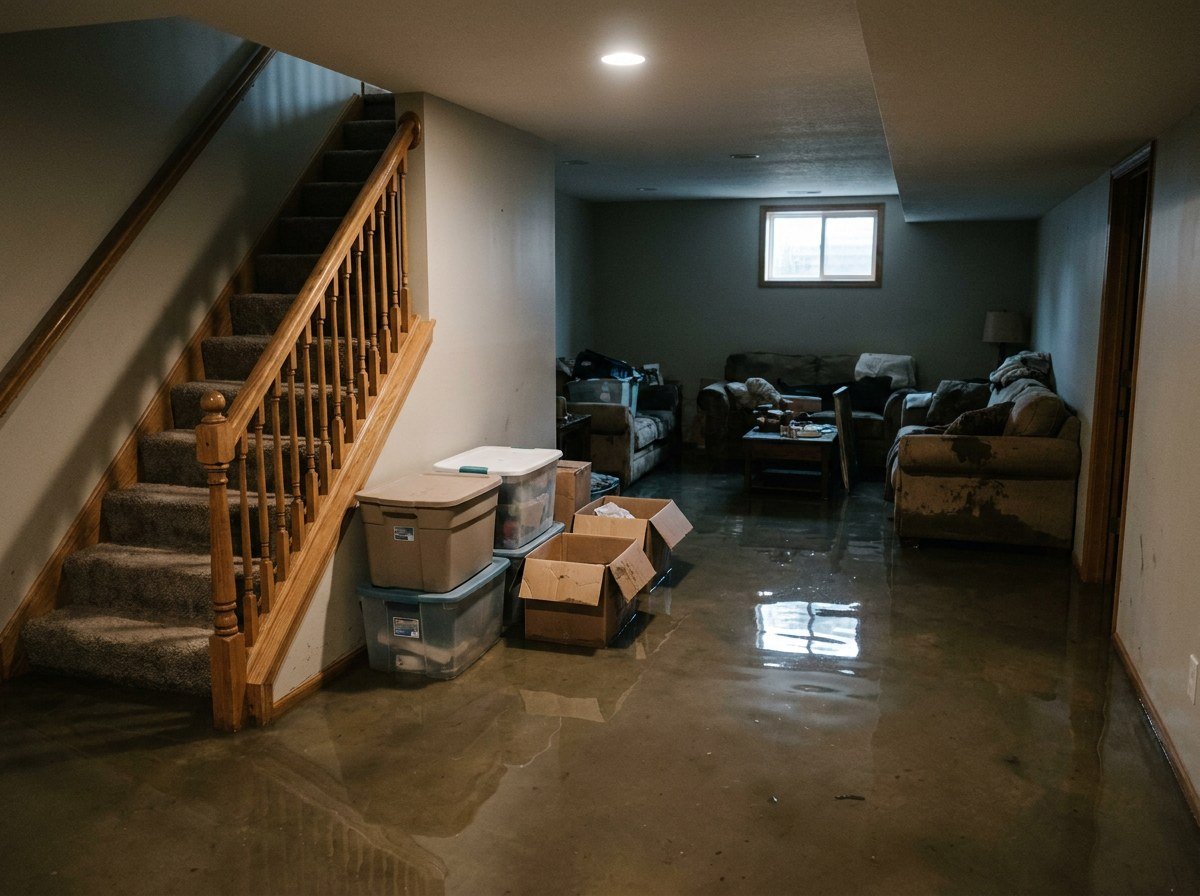
For a flooded basement, make safety the first decision: stay out of water near electricity, identify whether the water is clean or contaminated, document the loss, and remove standing water with equipment suited to the situation. Drying the room is only part of the job; wet walls, insulation, flooring, and contents also need decisions.
The basement flood cleanup checklist
- Do not enter until you can rule out electrical danger. If water is near outlets, appliances, extension cords, or the electrical panel, get advice before entering. Never wade through water to reach a breaker.
- Stop the source when possible. A failed sump pump, broken supply line, floor drain backup, or storm intrusion each calls for a different next step. Photograph the source before moving items.
- Classify the water. Water from a broken supply line may be relatively clean at first. A floor drain backup, sewage backup, or surface flood may contain pathogens and requires a more cautious response. Do not treat all basement water as interchangeable.
- Move unaffected contents to a dry area. Use gloves for wet boxes and do not handle soaked electrical items. Photograph furniture and stored belongings before discarding anything.
- Remove standing water with the right equipment. A wet vacuum may help with a small, clean amount of water in a safe area. Larger losses usually need extraction equipment and a plan for where the water will go.
- Open the drying path. Remove wet contents, expose baseboards only when safe, and use dehumidification and air movement suited to the material. A room can feel dry while moisture remains behind walls or beneath flooring.
- Track what was removed and what was saved. A simple room-by-room list gives you a record for insurance, repairs, and later decisions.
Why basements stay wet after the puddle is gone
Concrete can hold moisture, carpet pad can stay saturated below the face of the carpet, and finished walls can trap water at the bottom edge. A sump-pump failure may also leave water in the pit, discharge line, or surrounding soil. After heavy rain, a basement may have more than one source: runoff at the foundation, a floor drain that cannot keep up, or water entering through a window well.
Use a moisture meter as a clue, not a verdict. Readings vary by material, depth, temperature, and meter type. A professional assessment can map wet materials and decide whether drying, removal, cleaning, or repair is appropriate. Our moisture measurement guide explains what those readings can and cannot tell you.
What should you discard after a basement flood?
There is no single answer for every item. Porous material exposed to sewage or floodwater is harder to clean safely than a non-porous surface. Wet cardboard, some insulation, ceiling tiles, and heavily contaminated soft goods often cannot be restored. Solid wood, plastic, metal, and some fabrics may be candidates for cleaning and drying when the water source and condition allow it.
Do not make a quick discard pile before taking photos and asking your insurer what it needs. Keep a separate list for items that were removed, cleaned, stored, or discarded. If a child, older adult, or anyone with a respiratory condition lives in the home, take extra care with mold, dust, and contaminated materials.
How quickly should a flooded basement be dried?
The EPA recommends drying wet or damp areas and items within 24 to 48 hours when possible because mold growth depends on moisture. That is a planning target, not a promise that every material can be saved in that window. If the basement has been wet longer, the right response is still to remove standing water, lower humidity, and identify materials that cannot be fully cleaned and dried.
For a current loss, use our basement flood cleanup resource or request help with the location and water source.
Frequently asked questions
Follow local drainage rules and avoid sending contaminated water toward a neighboring property or public area. A professional can help choose a safe discharge plan.
Not usually. Drying depends on the moisture source, air movement, temperature, humidity, and the materials affected. A dehumidifier is one part of a monitored plan.
Sources and further reading
U.S. EPA: A Brief Guide to Mold, Moisture and Your Home — 24–48 hour drying guidance and moisture control.
U.S. EPA: Dealing with Debris and Damaged Buildings — contaminated water and wet-material precautions.