Structural Drying Services: Prove the Building Is Dry Before Repair
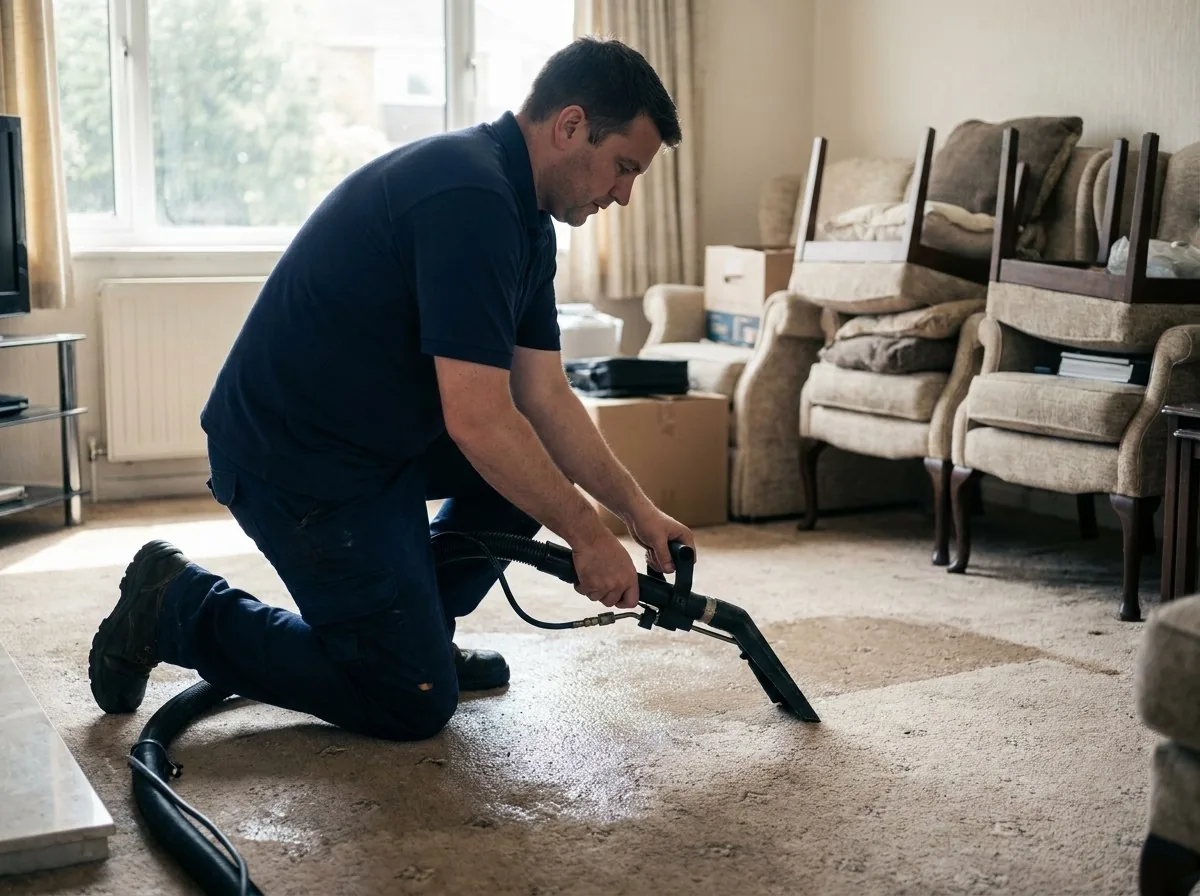
Extraction removes visible water; structural drying addresses the moisture that remains in drywall, subfloors, framing, insulation, and enclosed cavities.
What to do when water has been removed but walls, floors, or framing still read wet
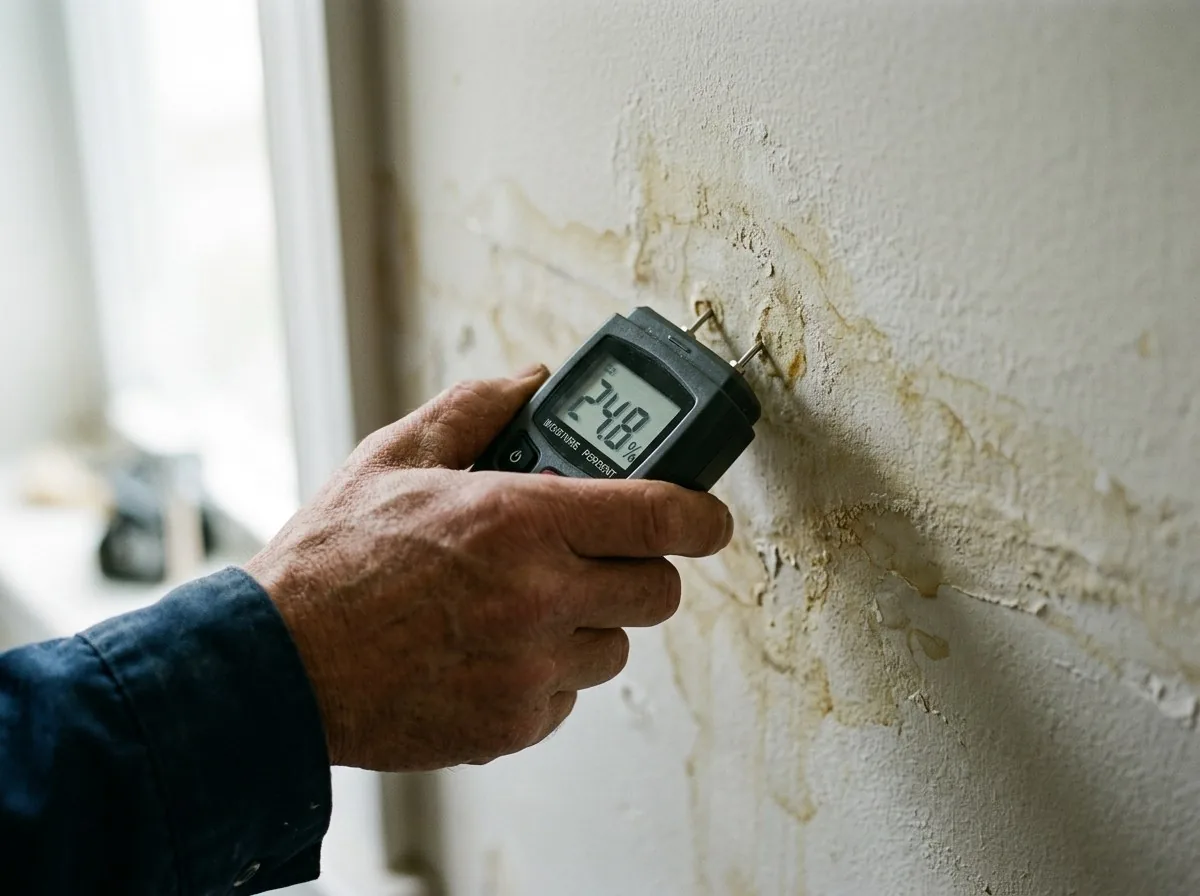
A proper drying plan starts with moisture mapping, source control, air movement, humidity management, and repeated readings. The goal is documented improvement—not simply running fans until the room feels comfortable.
Do not close walls, replace flooring, or repaint just because the surface feels dry. Trapped moisture can create swelling, odor, and microbial growth later.
What a responder will look for
The responder compares affected materials with unaffected areas, selects equipment, and records readings during the drying cycle.
Material response
Drywall, wood, insulation, concrete, and flooring each have different drying behavior.
Air and humidity
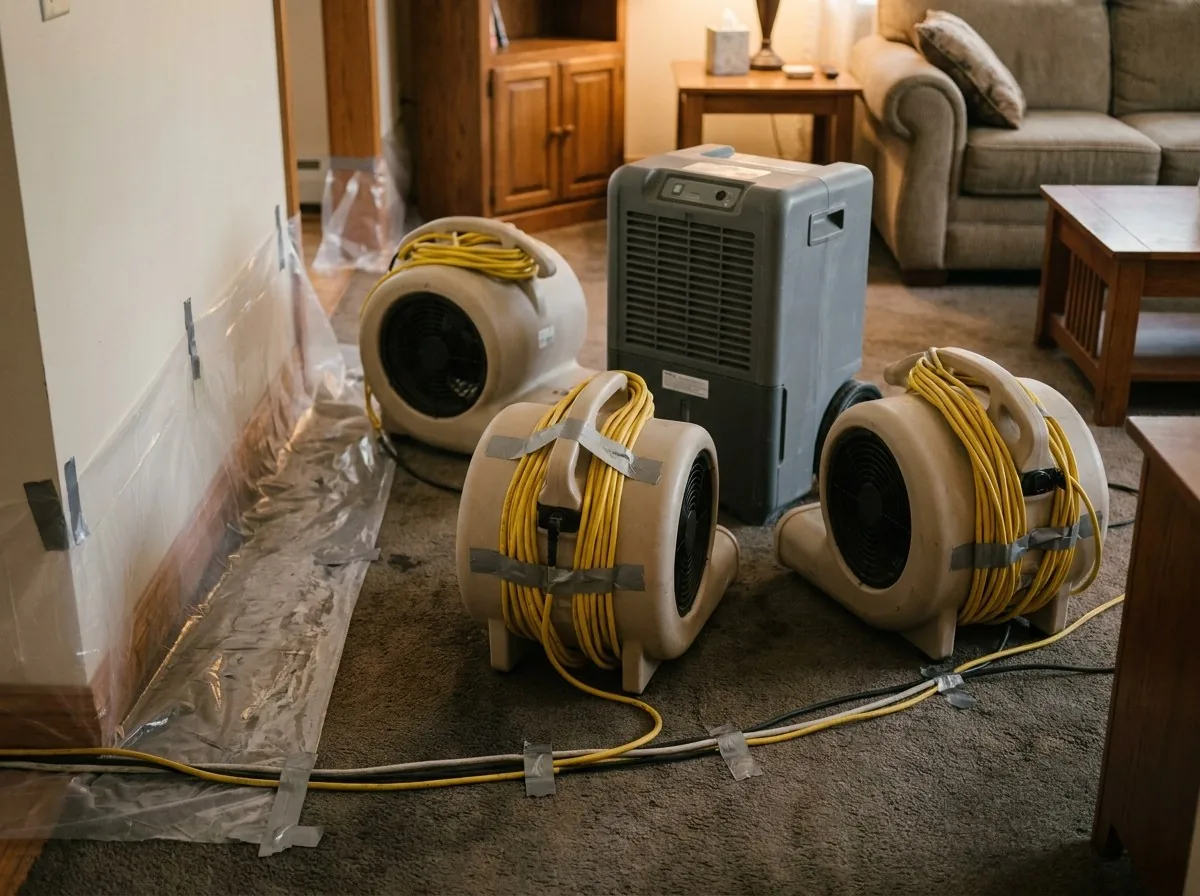
Dehumidification matters because air movement alone can redistribute moisture.
Documentation
Daily or repeated readings help show whether the plan is working and when repairs can begin.
Steps that protect people and property
- Keep the source stopped and the affected rooms accessible.
- Do not remove equipment or change its placement without checking with the responder.
- Photograph visible damage and keep receipts for emergency purchases.
- Ask which readings or conditions will be used to decide that the structure is dry.
Indianapolis weather can affect humidity and drying time, especially in basements and closed-up homes. A room can feel dry while a subfloor or wall cavity still needs attention.
From first call to a dry, documented property
Map
Readings identify the wettest materials and establish a baseline.
Set equipment
Air movers and dehumidifiers are positioned to support the material and room conditions.
Monitor
The plan is adjusted when readings plateau or hidden moisture is discovered.
Verify
Drying ends when materials reach an appropriate dry standard relative to the building.
Frequently Asked Questions
There is no honest one-size-fits-all timeline. Water source, material, temperature, humidity, ventilation, and how long the building was wet all matter.
Fans move air, but drying usually also requires controlling humidity and measuring materials. Equipment should be selected and monitored based on the building.
It can record room conditions, equipment, moisture readings, and changes over time. This supports decisions about repair and insurance documentation.
Independent guidance
This page is general education, not insurance, legal, electrical, or medical advice. For safety and moisture-control background, see EPA mold and moisture guidance, EPA flood cleanup guidance, and CDC floodwater safety guidance.
Need a clear next step?
Tell us what happened and we'll route your request to a local restoration professional who can assess the damage.