Appliance Leak Cleanup for Indianapolis Homes and Businesses
Appliance leaks are often discovered after water has traveled under cabinets or finished flooring. The right response depends on the appliance, the connector, the water source, and how long the leak continued.
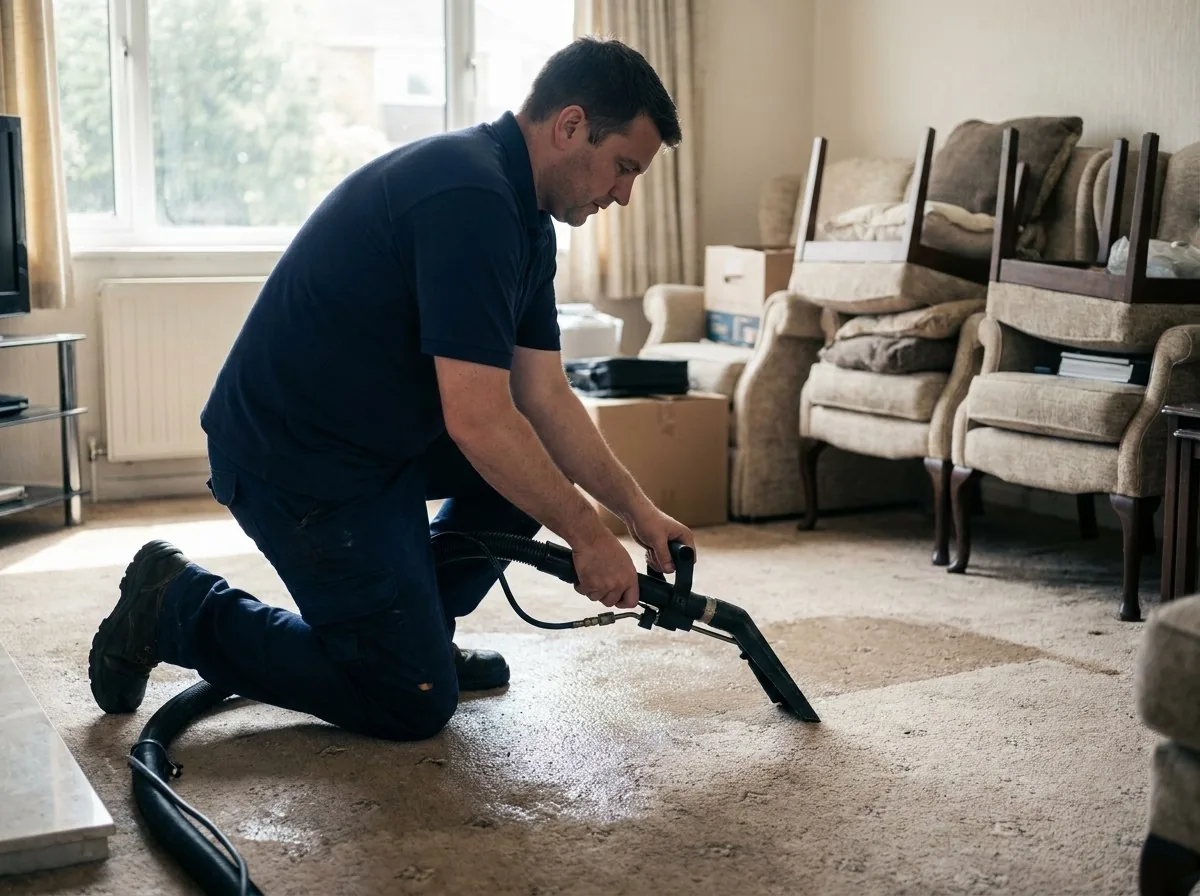
What to do when a washing machine, dishwasher, refrigerator, or ice-maker line has leaked
Stop the appliance cycle, close the supply valve if it is safe to do so, and look beyond the puddle. Cabinets, flooring, baseboards, and wall cavities may hold more moisture than the surface suggests.
Do not keep running an appliance to test it if the floor or outlet is wet. Disconnecting a wet appliance should be handled safely.
What a responder will look for
A responder checks the supply and drain lines, cabinet bases, toe-kicks, flooring transitions, and any adjacent room where water could have migrated.
Leak source
Supply lines, drain hoses, door gaskets, pumps, and refrigerator connections create different patterns of damage.
Cabinet and floor
Particleboard cabinet bases can swell quickly, while flooring may hide moisture at seams and beneath finish layers.
Adjacent rooms
Water can run beneath appliances and cabinets before appearing in a hallway or finished room.
Steps that protect people and property
- Stop the cycle and close the supply valve if it is clearly accessible.
- Keep wet appliances and outlets untouched until safe.
- Photograph the appliance, connector, cabinet base, flooring, and water path.
- Do not reinstall toe-kicks or push the appliance back into place until the area is dry and inspected.
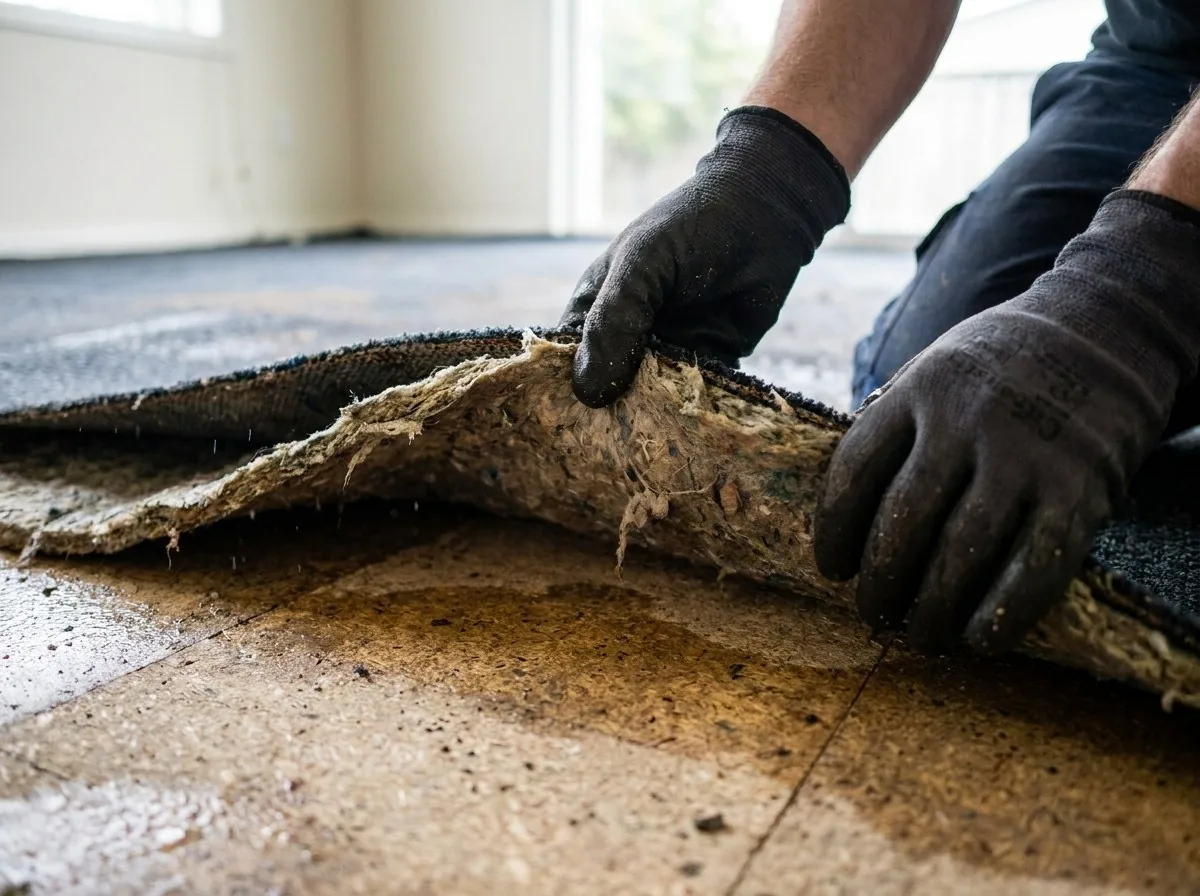
Kitchen and laundry losses are especially easy to underestimate because cabinets and finished floors conceal the lower edges of the damage. Keep the appliance model and age with your documentation.
From first call to a dry, documented property
Contain
The supply source is stopped and the affected area is made safe.
Inspect
Cabinet bases, flooring, drywall, and insulation are checked for hidden moisture.
Dry
Targeted extraction and dehumidification are used based on the assembly.
Repair
Appliance or plumbing repair is coordinated before new finish materials are installed.
Frequently Asked Questions
Any appliance installed over a concealed or absorbent assembly can. Dishwashers, refrigerators, washing machines, and ice-maker lines commonly send water under cabinets or flooring.
Sometimes a solid wood or plywood base can be dried; swollen particleboard and MDF often lose their shape. An assessment helps separate salvageable materials from replacement items.
Call for immediate help based on the active risk. The plumber or appliance technician stops the source; a restoration professional addresses the building materials and moisture that remain.
Independent guidance
This page is general education, not insurance, legal, electrical, or medical advice. For safety and moisture-control background, see EPA mold and moisture guidance, EPA flood cleanup guidance, and CDC floodwater safety guidance.
Need a clear next step?
Tell us what happened and we'll route your request to a local restoration professional who can assess the damage.