Water Damage After a Sprinkler Discharge: First Steps for a Property Owner
After a sprinkler discharge, protect people, stop the water through the building's emergency process, and document the affected rooms and equipment before cleanup.
Published August 25, 2026 · Updated October 6, 2026 · General education for Indianapolis-area property owners
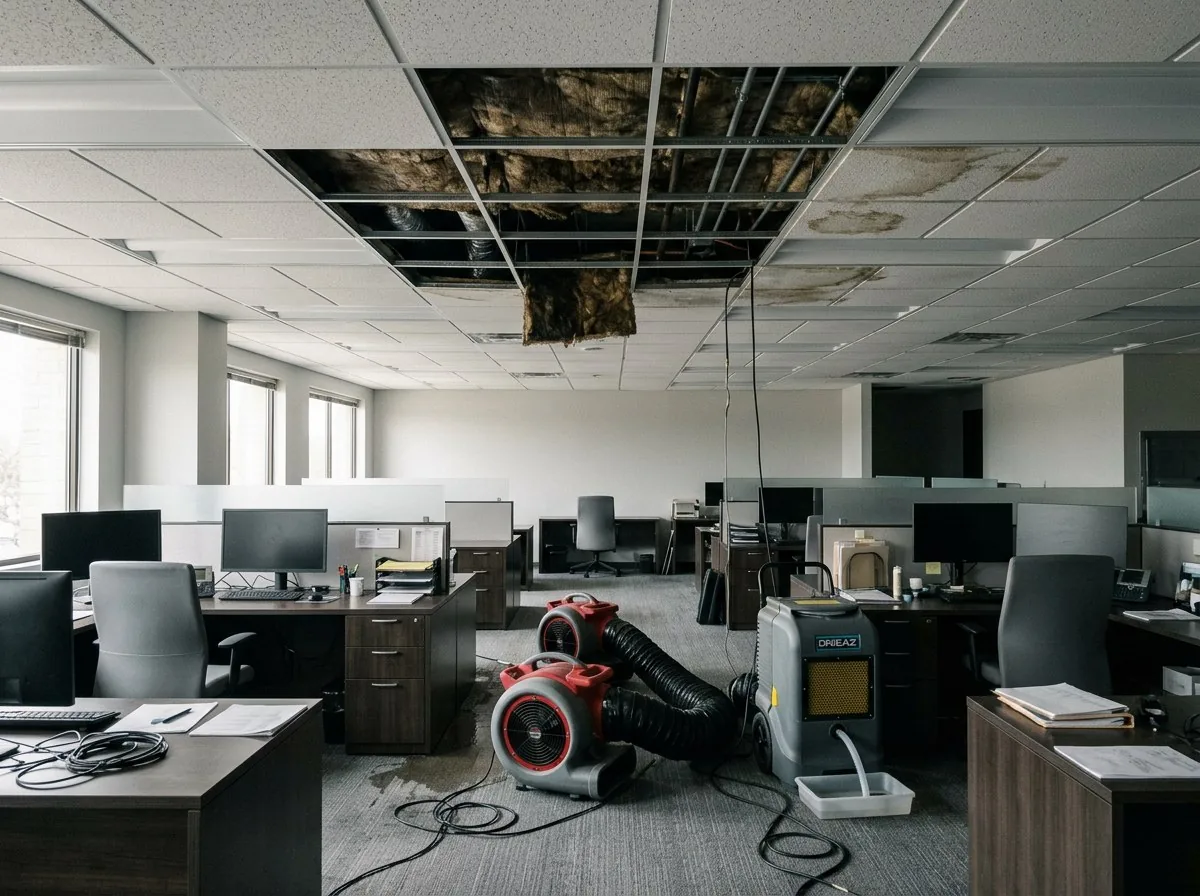
After a sprinkler discharge, protect people, stop the water through the building's emergency process, and document the affected rooms and equipment before cleanup.
Why this problem is easy to underestimate
Sprinkler water can affect ceilings, walls, flooring, contents, and multiple rooms. The system reset, source repair, and building drying need coordination.
A single head or valve event can release water above a ceiling and spread through a large area before the system is secured.
What to check first
- Which head, valve, or pipe activated.
- The rooms and levels affected.
- Electrical equipment, records, inventory, and occupied areas.
What to do next
Notify building management or the fire system contact.
Keep people away from unsafe ceilings and wet electrical equipment.
Photograph the source and water path.
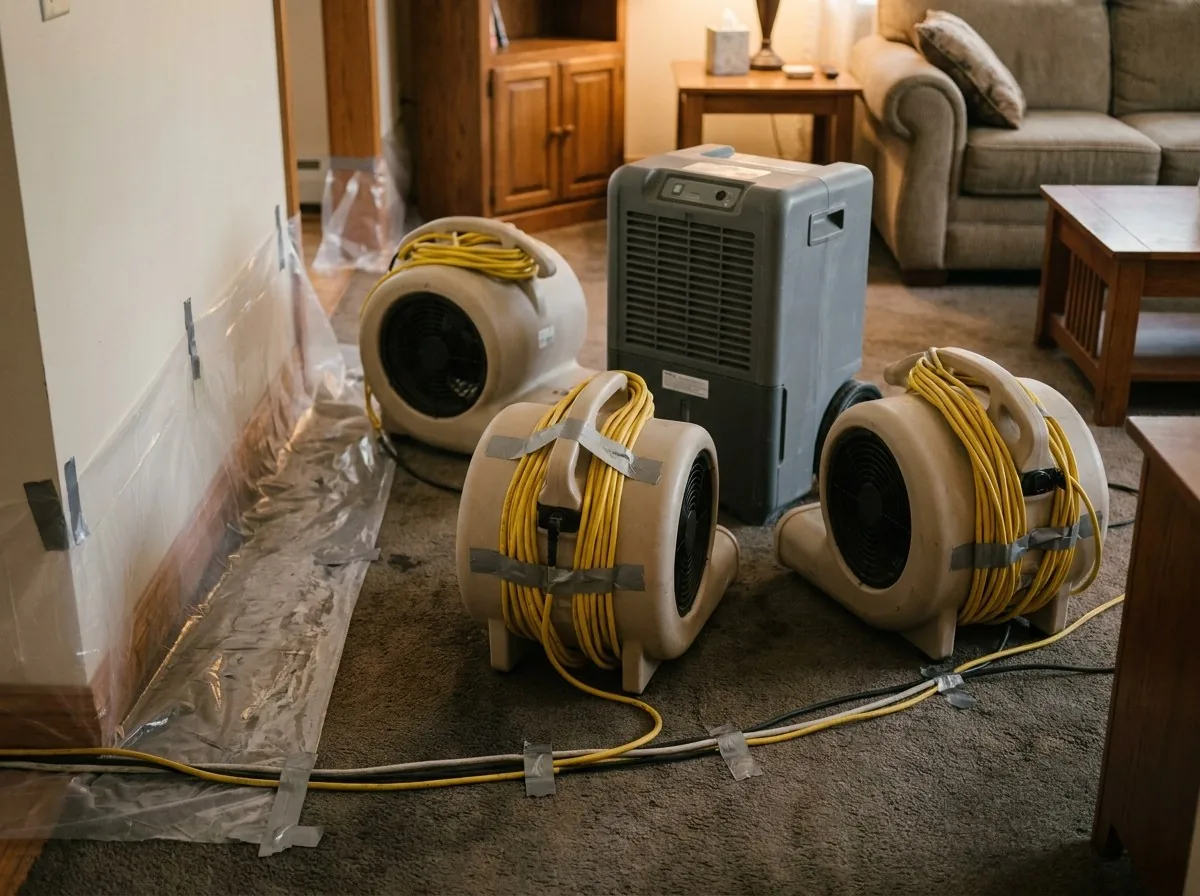
Request commercial or residential restoration assessment.
When a professional assessment makes sense
Fire system work and water mitigation may be separate but must be sequenced.
Businesses should document downtime, equipment, and temporary operations.
Frequently Asked Questions
Use the building's qualified emergency process; do not alter the system casually.
It may be cleaner than sewage, but it can still pick up dust and building contaminants.
The water path may cross rooms and floors; map the full footprint.
Independent guidance
This page is general education, not insurance, legal, electrical, or medical advice. For safety and moisture-control background, see EPA mold and moisture guidance, EPA flood cleanup guidance, and CDC floodwater safety guidance.
Water is already affecting the property?
Use the emergency guide or call so the situation can be assessed before a small loss becomes a larger repair.