What Is a Moisture Meter and How Does It Work?
The tool that turns 'looks dry' into an actual, verifiable answer — here's how it works and why it matters.
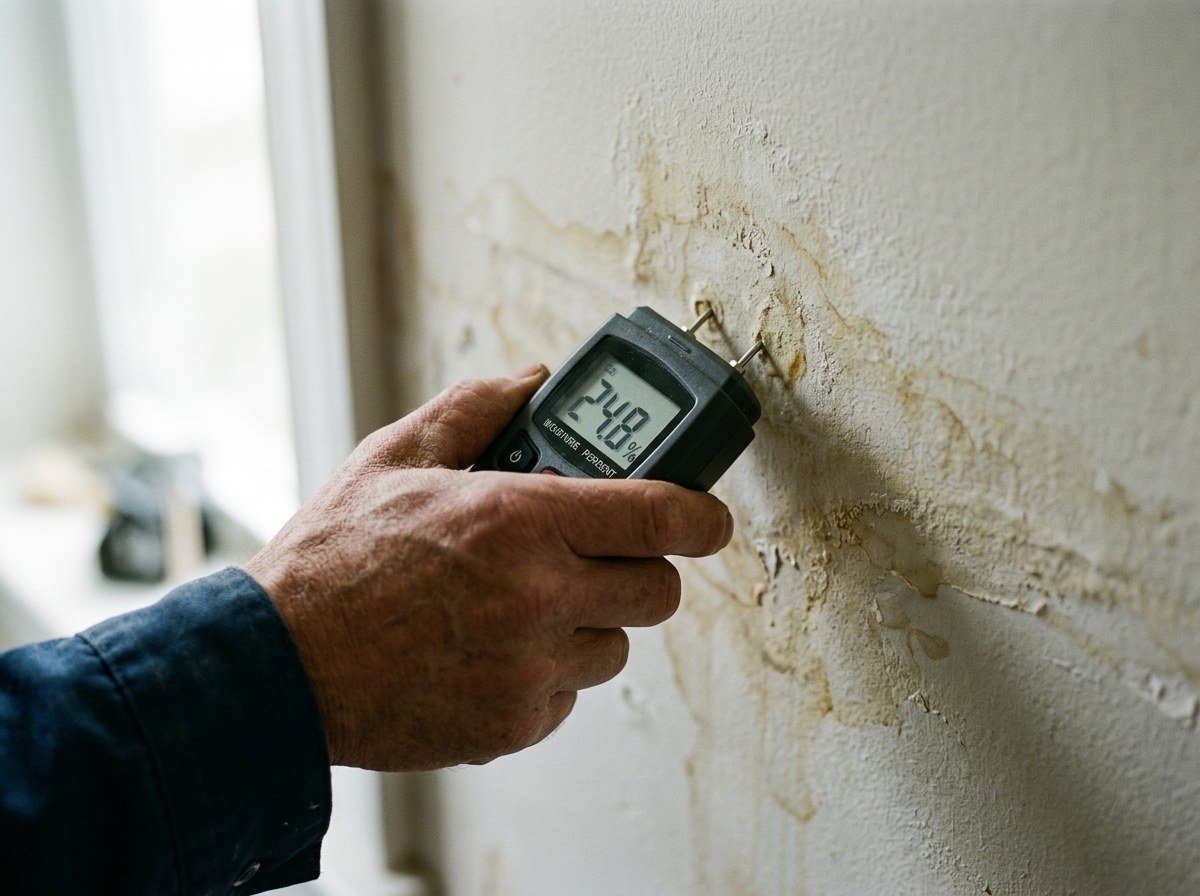
A moisture meter measures the moisture content of a material, giving restoration professionals an objective number instead of relying on how something looks or feels. This is the tool that answers the question "is this actually dry?" — and the answer is often no, even when a surface looks and feels fine.
Two Main Types
Pin-Type Meters
These have two small metal probes that get pressed into the material, measuring electrical resistance between them — wetter material conducts electricity more easily, giving a lower resistance reading that translates to a higher moisture percentage. They're precise but leave tiny puncture marks, so they're used carefully on finished surfaces.
Pinless (Non-Invasive) Meters
These use electromagnetic sensing through a flat pad pressed against the surface, without puncturing anything. They're commonly used for a first pass across a large area to identify where moisture is present, before following up with pin-type readings for precision in specific spots.
How Readings Are Used
Professionals take a baseline reading from an unaffected, known-dry area of the same material — dry drywall reads differently than dry wood — and compare readings from the affected area against that baseline throughout the drying process. Drying is considered complete when readings return consistently to that baseline range, not on a fixed schedule.
Why This Matters More Than It Seems
Pulling drying equipment based on how a room looks or feels, rather than actual moisture readings, is one of the most common ways a "finished" drying job leaves hidden moisture behind — moisture that can lead to mold growth weeks later. See our guide on how drying time actually works for more on this.
Frequently Asked Questions
Consumer-grade moisture meters exist and can be useful for spot-checking suspected problem areas, though they're generally less precise than professional-grade equipment. They're a reasonable tool for early detection, not a substitute for a professional assessment on an active drying job.
Want an actual moisture reading, not a guess?
A professional assessment tells you exactly what's still wet.