Ceiling Water Damage in Indianapolis: Find the Source Before the Ceiling Fails
A ceiling stain is a visible clue, not a complete diagnosis. Water may be coming from a bathroom, supply line, roof penetration, HVAC drain, or another floor above.
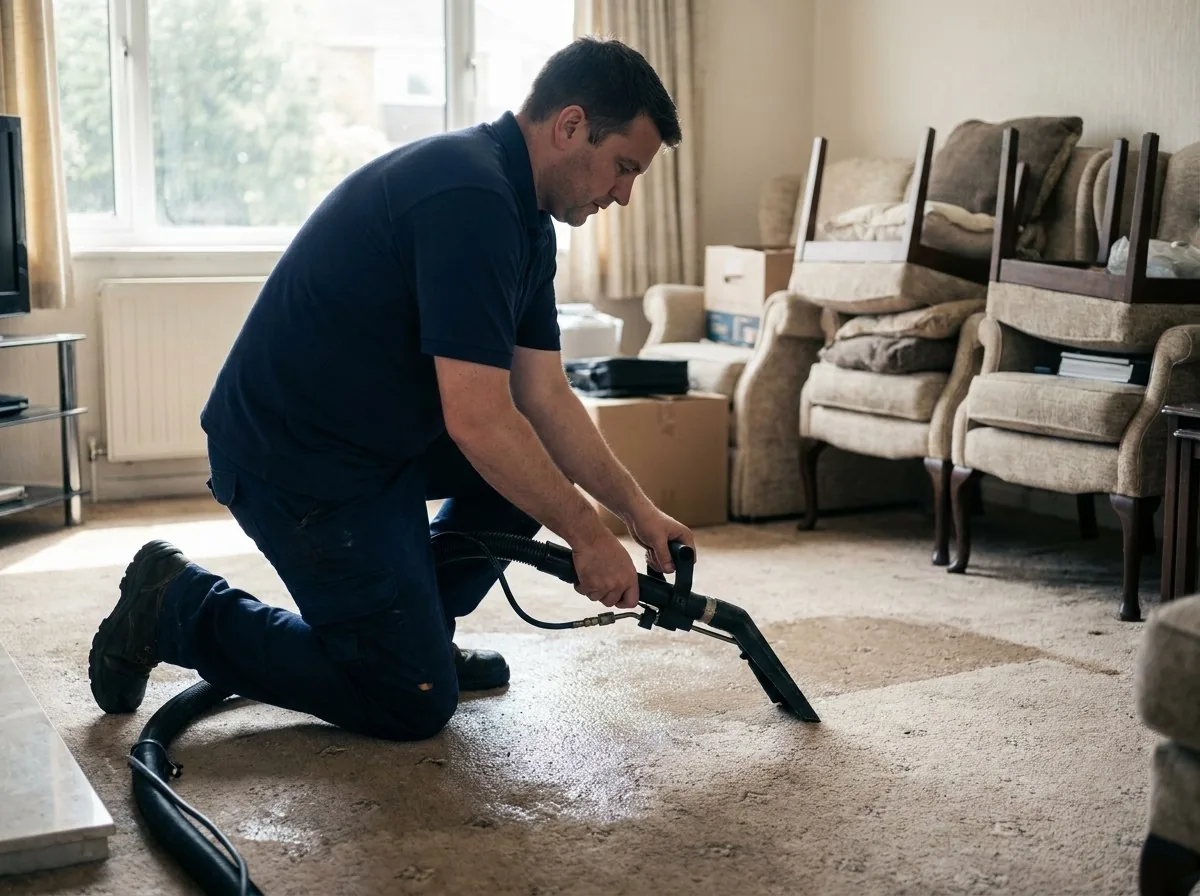
What to do when a brown stain, active drip, or soft ceiling after an upstairs leak
Keep people away from sagging drywall, stop the source if it is safely accessible, and get the cavity checked for hidden moisture. A dry-looking ceiling can still hold water above the finish.
Do not stand beneath a bulging ceiling or cut into it around electrical fixtures. If water is near a light or wiring, leave the area and call a qualified professional.
What a responder will look for
The first visit is about source control, safety, and figuring out whether the moisture is limited to the finish or has reached insulation, framing, and the floor above.
Source and path
The responder traces the likely source instead of treating the stain as an isolated paint problem.
Ceiling cavity
Moisture readings and a visual inspection help show whether insulation, joists, or drywall are still wet.
Adjacent rooms
Water often travels along framing and can show up in a hallway, closet, or wall before the leak is obvious.
Steps that protect people and property
- Move furniture and people away from the area.
- If safe, shut off the fixture or plumbing source; never touch wet electrical equipment.
- Photograph the stain, drip path, and any damaged belongings before cleanup.
- Use a bucket only for short-term containment; do not press on a sagging ceiling.
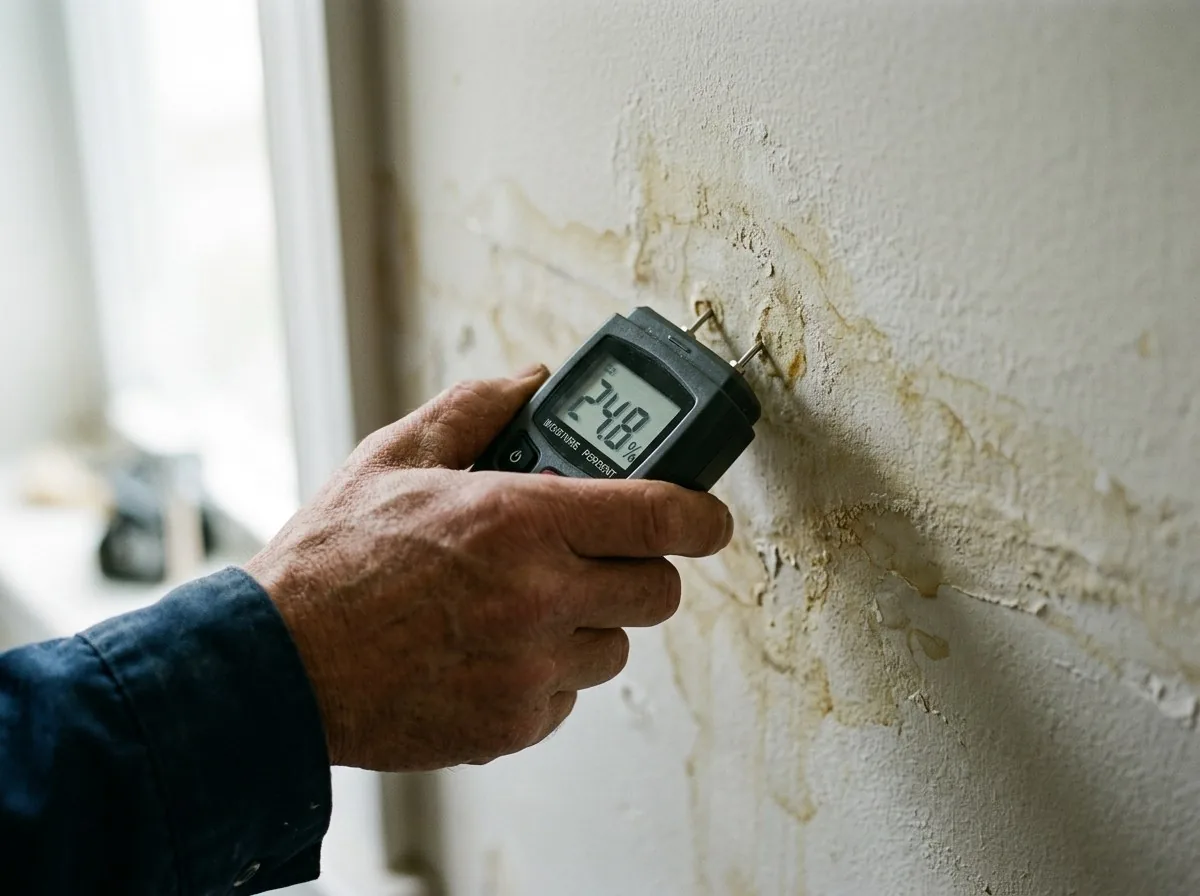
Indianapolis homes with finished second floors, older plaster, and attic spaces can hide a leak path. The right repair depends on the source and the materials, not just the size of the stain.
From first call to a dry, documented property
Document the loss
Photos and a written timeline help when you speak with your insurer, landlord, or property manager.
Assess and contain
A responder checks moisture, protects unaffected areas, and begins extraction or controlled opening where appropriate.
Dry and verify
Fans and dehumidification are used only where safe, with readings used to confirm progress.
Repair the cause
Plumbing, roofing, or HVAC repairs must be coordinated so the same source does not wet the finished repair again.
Frequently Asked Questions
Not unless a qualified professional has assessed the area and the electrical and structural risks. A bulging or sagging ceiling can release water and drywall unexpectedly.
The surface may dry while the cavity remains wet. The source, insulation, framing, and adjacent rooms should be checked before repainting.
Not always. The extent depends on the water source, how long it was present, and whether porous materials or electrical components were affected.
Independent guidance
This page is general education, not insurance, legal, electrical, or medical advice. For safety and moisture-control background, see EPA mold and moisture guidance, EPA flood cleanup guidance, and CDC floodwater safety guidance.
Need a clear next step?
Tell us what happened and we'll route your request to a local restoration professional who can assess the damage.