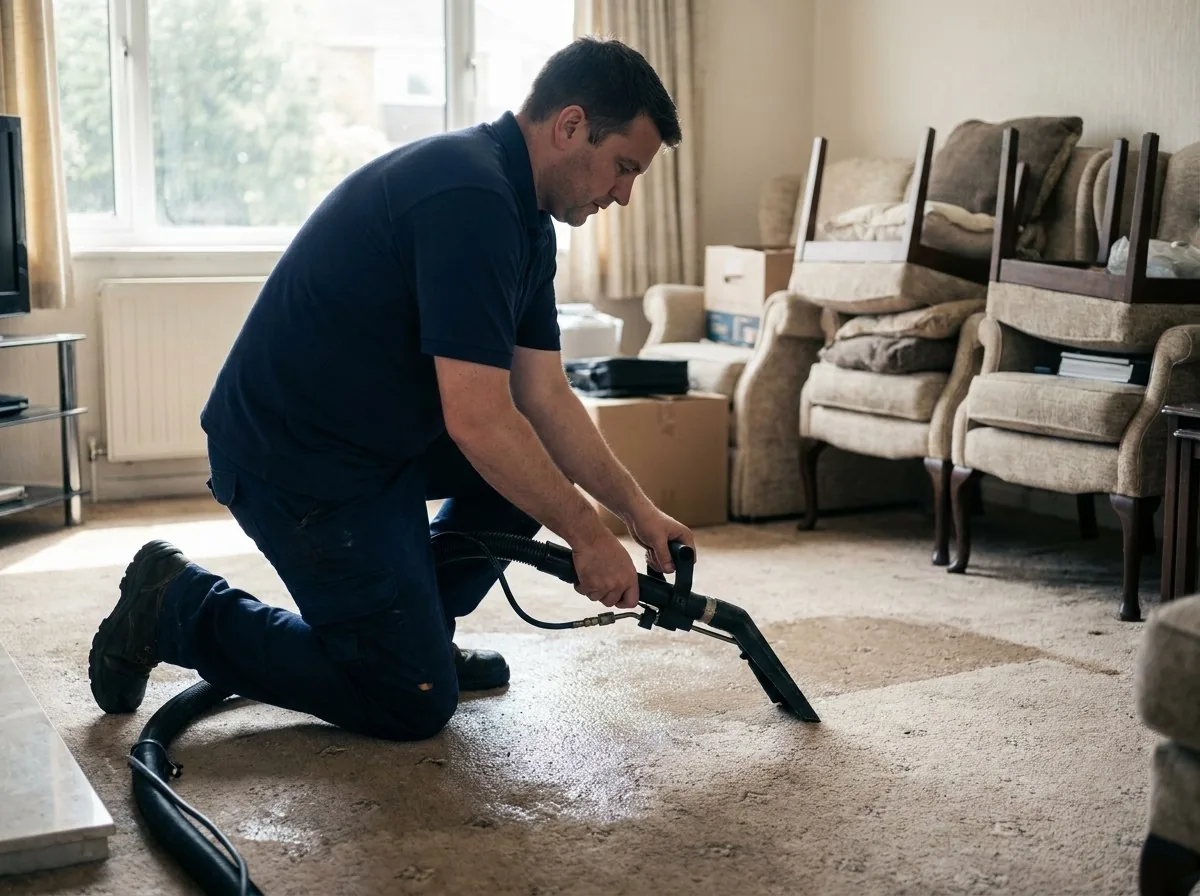
Storm Water Damage Cleanup in Central Indiana
Storm water is not one uniform problem. Wind-driven rain through a roof opening, groundwater through a basement wall, and sewer-contaminated water each need a different safety and cleanup response.
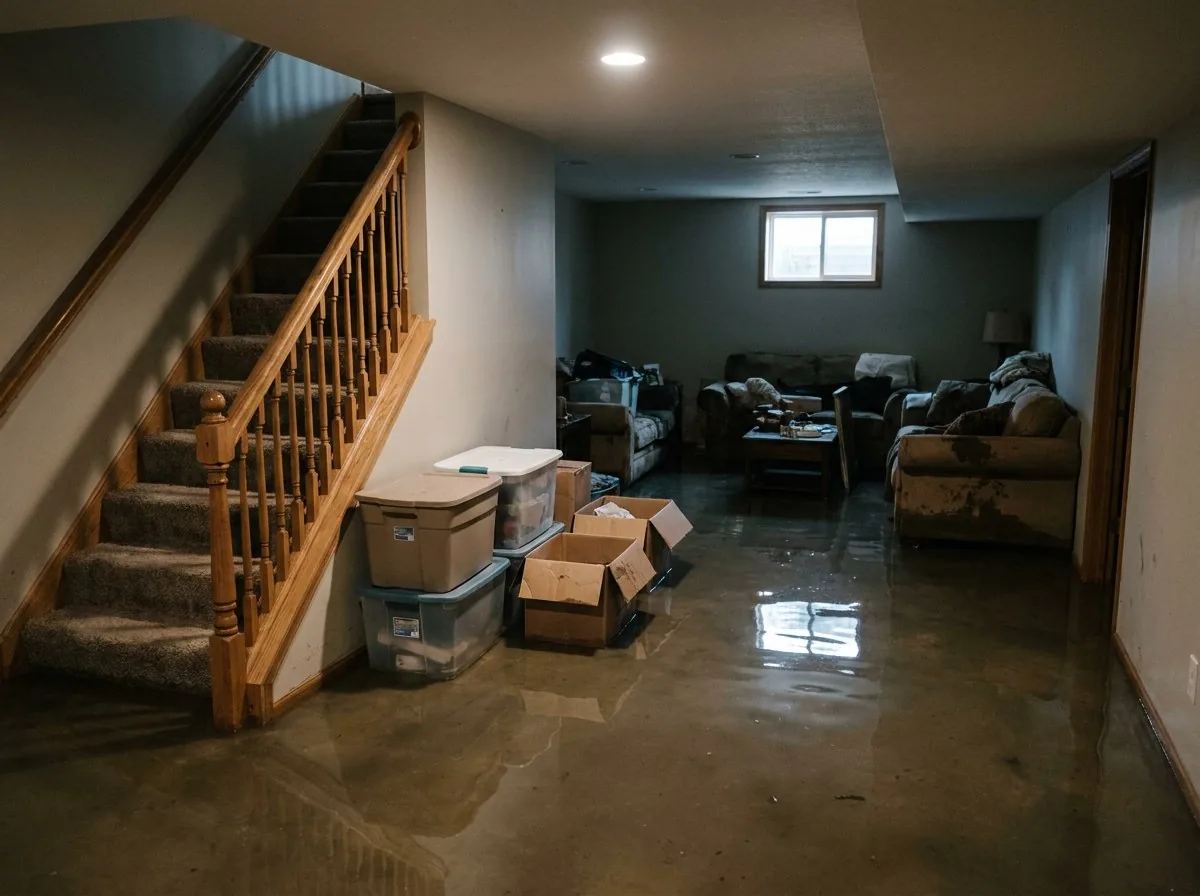
What to do when rainwater, storm runoff, or wind-driven rain entering a home or business
Keep people out of unsafe standing water, avoid wet electrical equipment, and separate the entry point from the visible damage. The room with water may not be where the storm created the opening.
Do not assume all storm water is clean. Floodwater can contain sewage, chemicals, and debris; use the CDC guidance linked below when contamination is possible.
What a responder will look for
An assessment connects the weather event to the building envelope, drainage, electrical safety, and interior materials.
Water category
The responder asks where the water came from and whether it contacted soil, sewage, or chemicals.
Building envelope
Roof, window, siding, foundation, and drainage points are checked for the entry path.
Priority rooms
Electrical rooms, finished basements, kitchens, and occupied areas receive early attention.
Steps that protect people and property
- Stay out of standing water if electricity may be involved.
- Photograph exterior openings, downspouts, flooded areas, and damaged belongings.
- Use towels only for small surface spills; do not spread contaminated water with a household vacuum.
- Call for an assessment if water reached wall cavities, flooring, insulation, or mechanical equipment.
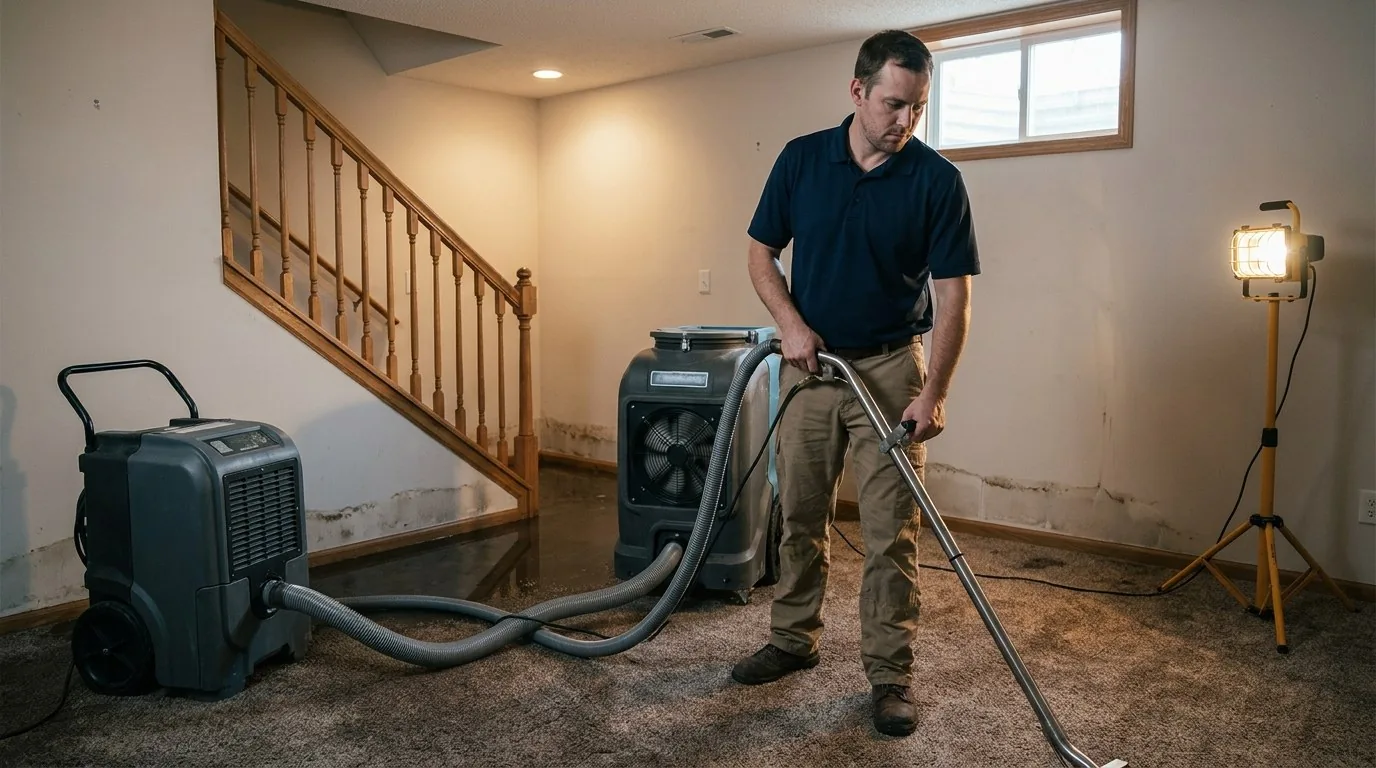
Summer storms and freeze-thaw weather can produce very different water-loss patterns in Indianapolis. Keep the weather date and any storm photos with your property records.
From first call to a dry, documented property
Stabilize
The immediate priority is safety and stopping additional water where practical.
Extract
Standing water and affected porous materials are handled based on source and contamination.
Dry
Moisture readings, dehumidifiers, and targeted air movement guide the drying plan.
Coordinate repairs
Roofing, plumbing, drainage, and reconstruction work are sequenced after the structure is dry enough to evaluate.
Frequently Asked Questions
The label depends on the source and policy language. Groundwater and surface water are often treated differently from a sudden plumbing failure, so review your policy and document the source.
Only when the water is known to be clean and there is no electrical or mold risk. If sewage or floodwater may be involved, pause and get qualified guidance.
Photograph the outside entry point, water line, flooring, drywall, belongings, electrical equipment, and any visible debris before moving items when safe.
Independent guidance
This page is general education, not insurance, legal, electrical, or medical advice. For safety and moisture-control background, see EPA mold and moisture guidance, EPA flood cleanup guidance, and CDC floodwater safety guidance.
Need a clear next step?
Tell us what happened and we'll route your request to a local restoration professional who can assess the damage.