Before rebuilding, ask whether the water source is repaired, which materials were checked, what drying targets were used, and what remains uncertain. Keep the final readings and removal decisions with the repair scope. A dry surface, a fixed number of days, or equipment pickup alone does not establish that concealed materials are ready.
Start with the source-repair record
Ask who repaired the pipe, roof, appliance connection, or drainage problem and what was done. Keep the invoice or work note. If the cause is still uncertain, record that uncertainty instead of calling the project complete. Drying and cause investigation may involve different providers; the rebuilding contractor needs to know both outcomes.
For a loss linked to rain, ask how recurrence will be evaluated without assuming that one dry day proves the repair. For a plumbing failure, ask the repair provider what was checked before the system returned to service. These are questions for the responsible trade, not instructions to test a suspect system yourself.
Ask for measurements tied to places and materials
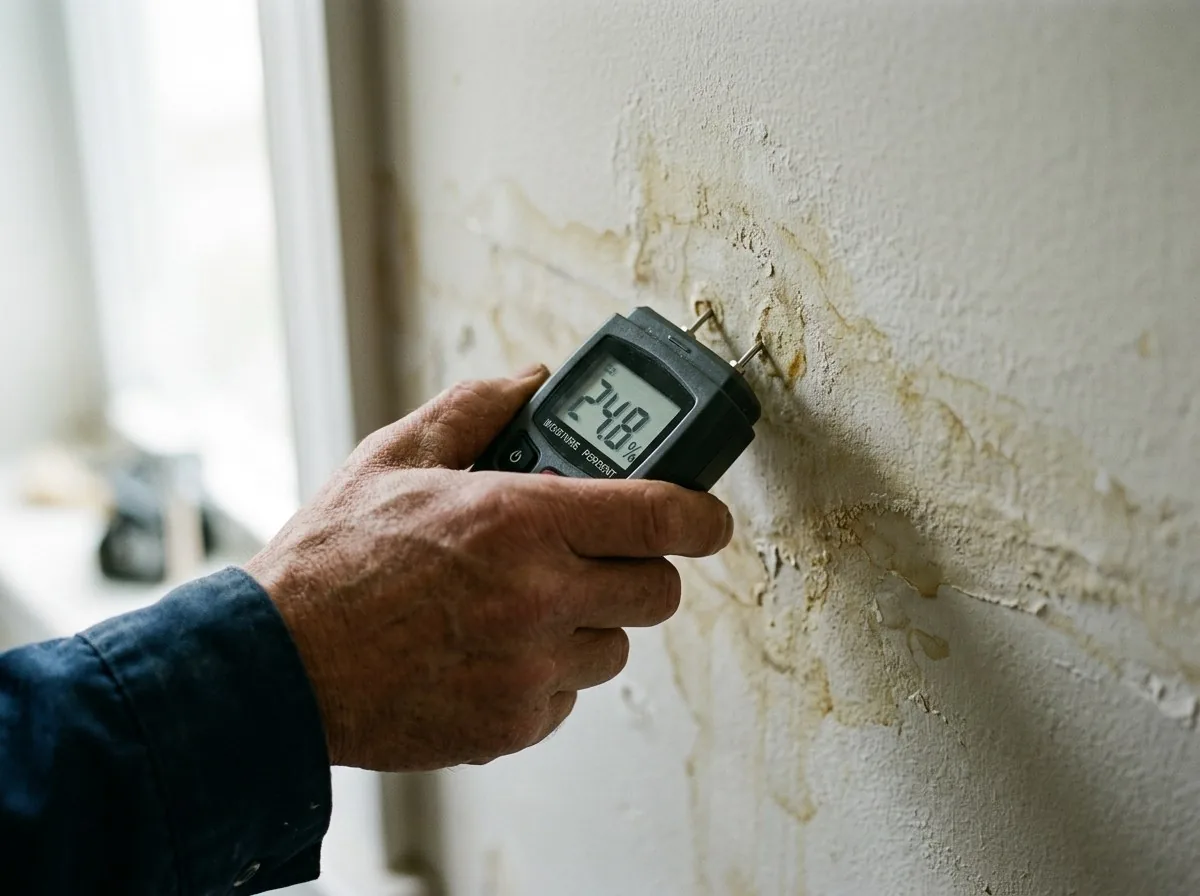
A number on its own is difficult to interpret. Ask the restoration provider to identify the meter or method, the material, the measurement location, and the target or comparison used. Ask whether the record includes affected layers such as subfloor, insulation, and the wall cavity where access was needed.
The University of Nebraska–Lincoln’s drying guidance warns that rebuilding before wood is sufficiently dry can trap moisture. It also explains why moisture measurement matters before installing wallboard and insulation. Ask your provider to interpret the actual materials and applicable installation requirements; do not apply a single percentage to every building product.
| Record | Why you need it | Follow-up question |
|---|---|---|
| Source-repair note | Shows what stopped the water | Is any cause investigation still open? |
| Affected-area map | Connects readings to rooms and assemblies | Were adjacent rooms or units checked? |
| Final moisture record | Documents the drying decision | What material-specific target was used? |
| Removal list | Explains what was discarded or opened | What must be replaced before the space is used? |
| Remaining-work scope | Separates drying from repairs | Who owns each unfinished task? |
Understand the limits of a reading
A thermal image, surface reading, and measurement of an exposed material do not answer exactly the same question. Ask the provider what its method can assess and what it cannot. If the final record covers only a visible face of an assembly, ask how the hidden layer was evaluated.
Our moisture measurement guide explains the assessment process. You do not need to become a technician to review the handoff. You need enough explanation to understand why the provider is recommending closure, further drying, or removal.
Drying completion and cleanup completion are separate decisions
If the loss involved sewage, outdoor floodwater, or mold, ask how contamination and cleanup were assessed as well as moisture. Do not use a “dry” reading to substitute for those decisions. Ask whether the cleanup scope is complete and whether any restricted areas remain.
EPA’s remediation evaluation guidance emphasizes fixing the moisture problem and reviewing the cleaned area. That is broader than checking whether the equipment can leave. A qualified provider should explain which conditions it assessed and what is outside its scope.
Bring the rebuilding contractor into the handoff
Send the source-repair note, moisture record, and remaining-work scope to the person installing new finishes. Ask whether the proposed flooring or other product has installation conditions that still need to be met. A mitigation handoff and a manufacturer’s installation requirements may involve different checks.
For a rental or condo, confirm who can approve closure and repairs. Keep the manager or association informed where their approval is required. If one provider is doing both phases, ask for a written transition between the completed drying work and the new reconstruction scope.
When the record still leaves a question open
If the source remains unresolved, a material was not assessed, or the repair provider needs information that is missing, ask for a written follow-up before treating the space as ready to close. Keep the unresolved task visible in the work record. Do not fill that gap with a calendar estimate.
If you need a second assessment or a provider to explain the remaining moisture work, review assessment questions and request a restoration referral. Our structural drying page covers monitored drying; this checklist covers the records you keep before rebuilding.
Sources and editorial limits
- University of Nebraska–Lincoln: dry materials before repairing
- EPA: evaluating cleanup and remediation
This guide combines the cited guidance with practical questions and record templates. It is not a site inspection, a contractor credential claim, or a determination of coverage or legal responsibility. IndyWaterHelp is an independent information and referral resource.