You need a site-specific safety and access decision before staying in an apartment during drying. Ask management and the responding professionals about electrical hazards, contamination, damaged ceilings, usable rooms, and equipment placement. A running fan does not establish that the unit is safe to occupy or that drying is complete.
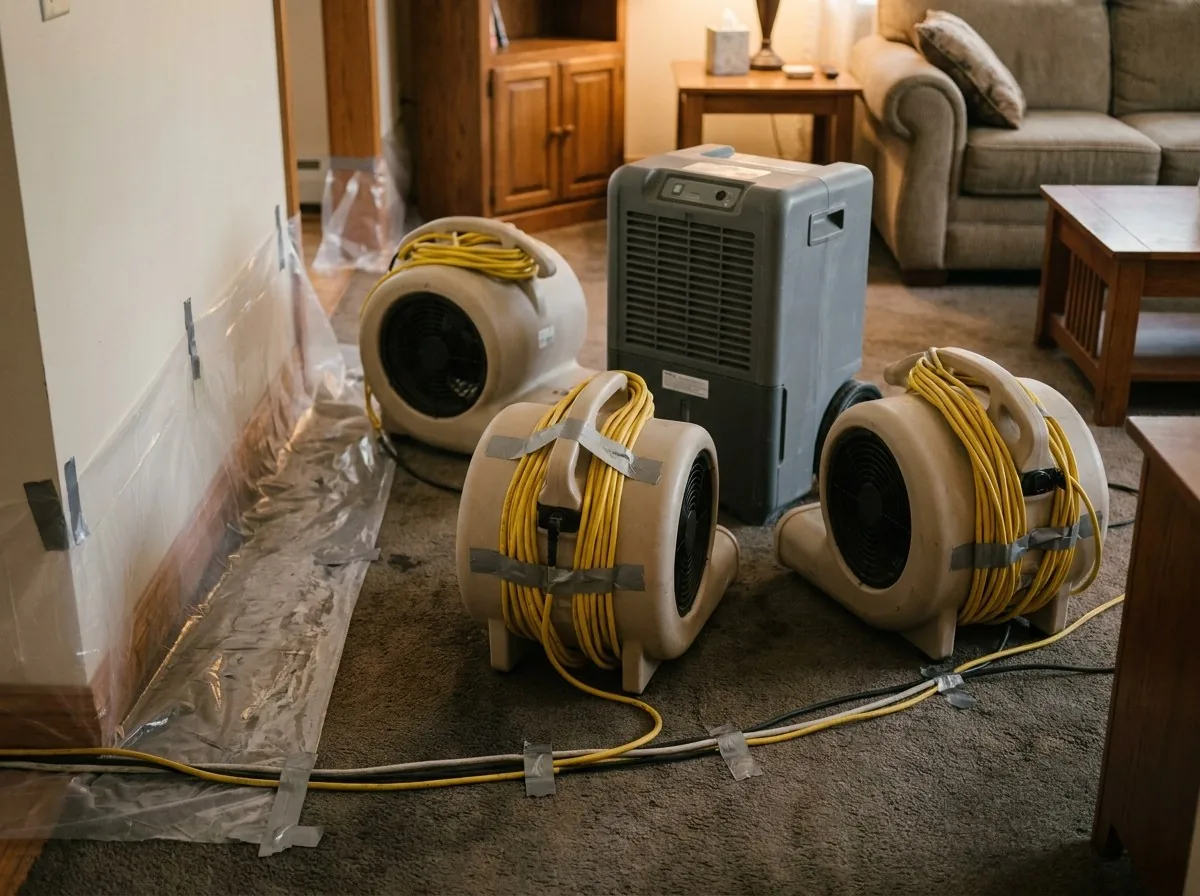
Ask for an occupancy decision, not just a drying schedule
Equipment may be running in one room while another remains accessible. Or a hallway, bathroom, or kitchen may be unusable. Ask management which spaces you can use, which you must avoid, and what would trigger a change in that decision. Keep the instructions in writing so everyone uses the same plan.
Describe the actual household needs: sleeping arrangements, access to a bathroom, mobility equipment, children, and pets. A generic “the fans are on” update does not answer those questions. If you have health concerns about exposure, ask a healthcare professional; an article or a phone referral cannot clear a particular apartment for occupancy.
Conditions to resolve before deciding to stay
- Electrical condition: Were outlets, wiring, appliances, or the panel exposed to water? Who assessed them?
- Water source: Was this a supply leak, sewage backup, or outdoor floodwater? Has the source stopped?
- Ceilings and surfaces: Are there sagging materials, open cavities, loose flooring, or areas under demolition?
- Safe routes: Can you reach the exit and essential rooms without passing through the work zone?
- Cleanup status: Has contaminated material or mold been addressed where present?
- Reassessment: Who should you contact if water, odor, damage, or equipment conditions change?
For flooded homes, EPA’s reoccupancy guidance includes resolving essential equipment, moisture, and mold conditions. Treat that guidance as background for questions to the people assessing your building. It is not a remote clearance for a room that has only had water extracted.
Make a plan for equipment, cords, and access
Ask the restoration provider to explain the intended equipment layout and where occupants can walk. Keep children and pets away from the work area. Do not move machines, redirect fans, open containment, or unplug equipment to make space without discussing it with the provider. If something appears electrically unsafe, keep away and seek qualified help.
Ask how the crew will enter for monitoring and how you will receive updates. If you work from home or sleep near the affected room, explain the practical problem and ask about alternatives. Noise, heat, blocked space, and repeat access deserve a plan; they should not lead you to alter the drying setup on your own.
If you need somewhere else to stay
Ask management what temporary arrangements are being offered, who approves them, and when the decision will be reviewed. Contact your insurer about the actual policy’s temporary accommodation provisions and any required authorization or receipts. Neither displacement nor reimbursement can be promised from the fact that water damage occurred.
Keep the dates you could not use essential rooms, the written instructions you received, and your receipts. Save the maintenance ticket and the provider’s updates separately from your own notes. Our renter water damage guide covers reporting and policy questions without deciding fault or lease rights.
Questions to send to management
Please confirm which rooms in unit [number] can be used during the drying work, which hazards have been assessed, and whether the exit, bathroom, and kitchen are accessible. Who should I contact if water returns or the equipment changes? Please also confirm the monitoring schedule and when the occupancy decision will be reviewed.
Add observations you made from a safe location. Do not enter a restricted room to complete the message. If you are told to leave because the building is unsafe, follow the instruction and keep a copy. A dispute over costs is a separate question from whether you should remain in a hazardous space.
What changes when drying ends?
Ask for a final update addressing the water source, affected materials, cleanup, remaining repairs, and whether occupancy restrictions still apply. Equipment removal alone does not explain each of those items. Where repairs continue after drying, ask which spaces remain part of the work zone.
For an active loss, report it through emergency maintenance first. Property owners and managers can request a restoration referral; tenants can use our apartment restoration coordination checklist to prepare the questions. Provider availability and the unit’s condition must be confirmed directly.
Sources and editorial limits
This guide combines the cited guidance with practical questions and record templates. It is not a site inspection, a contractor credential claim, or a determination of coverage or legal responsibility. IndyWaterHelp is an independent information and referral resource.