Keep away from standing water near electrical equipment, wet outlets, panels, cords, and appliances. Do not reset breakers or plug in equipment exposed to water. Contact qualified electrical help to assess the affected installation. Call emergency services for immediate danger; do not enter a hazardous area to take photos.
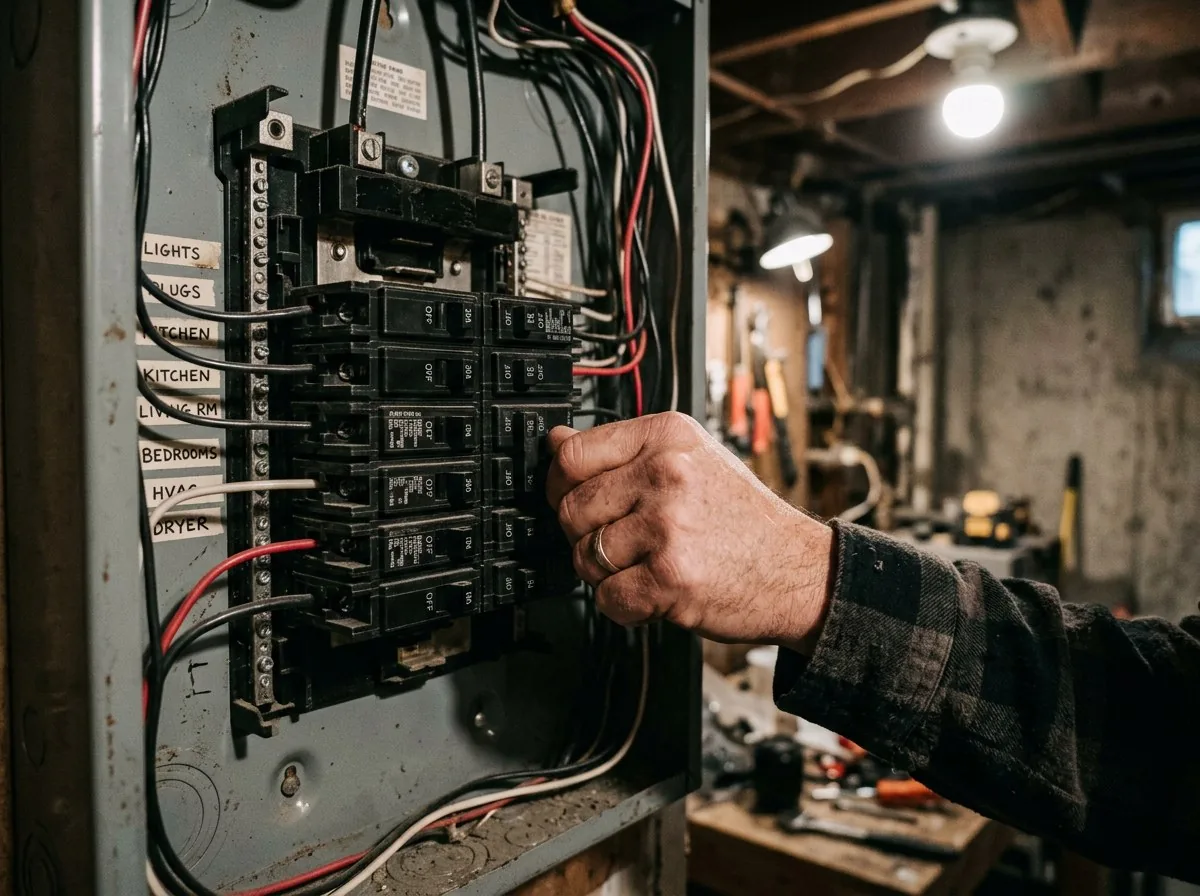
What not to touch
Do not touch wet electrical equipment or anything electrical while standing in water. Do not cross water to reach a breaker panel. A dry-looking switch does not establish that the circuit or connected equipment is safe.
EPA’s flood cleanup guidance identifies electrical shock hazards and advises against touching wet electrical equipment or equipment while standing in water. Tell the responding professional where water appeared and which equipment may have been affected.
Before pumps, fans, or dehumidifiers are used
Ask who has assessed the electrical condition and which power sources are appropriate for the cleanup. Do not test a wet outlet by plugging something into it. Keep cords and equipment out of occupant routes, following the responding provider’s instructions.
What to report from a safe location
- The room and where water is entering.
- Whether an outlet, panel, appliance, or mechanical system appears affected.
- Whether water is still active or the source status is unknown.
- Which areas people cannot safely enter.
In an apartment, contact emergency maintenance so management can coordinate access and qualified trades. Do not enter a shared electrical or mechanical room to investigate.
Questions for qualified responders
Ask which equipment requires evaluation or replacement, which areas remain restricted, and who will confirm that the affected installation can return to use. Drying a room does not by itself clear electrical components for service.
Use the emergency water damage guide for the broader response, or prepare assessment questions. If restoration help is needed after the safety boundary is established, request a referral.
Sources and editorial limits
This guide combines the cited guidance with practical questions and record templates. It is not a site inspection, a contractor credential claim, or a determination of coverage or legal responsibility. IndyWaterHelp is an independent information and referral resource.