Water Damage Behind Kitchen Cabinets: Signs and Next Steps
How to find hidden moisture under sinks, dishwashers, refrigerators, and cabinets after a kitchen leak.
Published and updated August 25, 2026 · General education for Indianapolis-area property owners
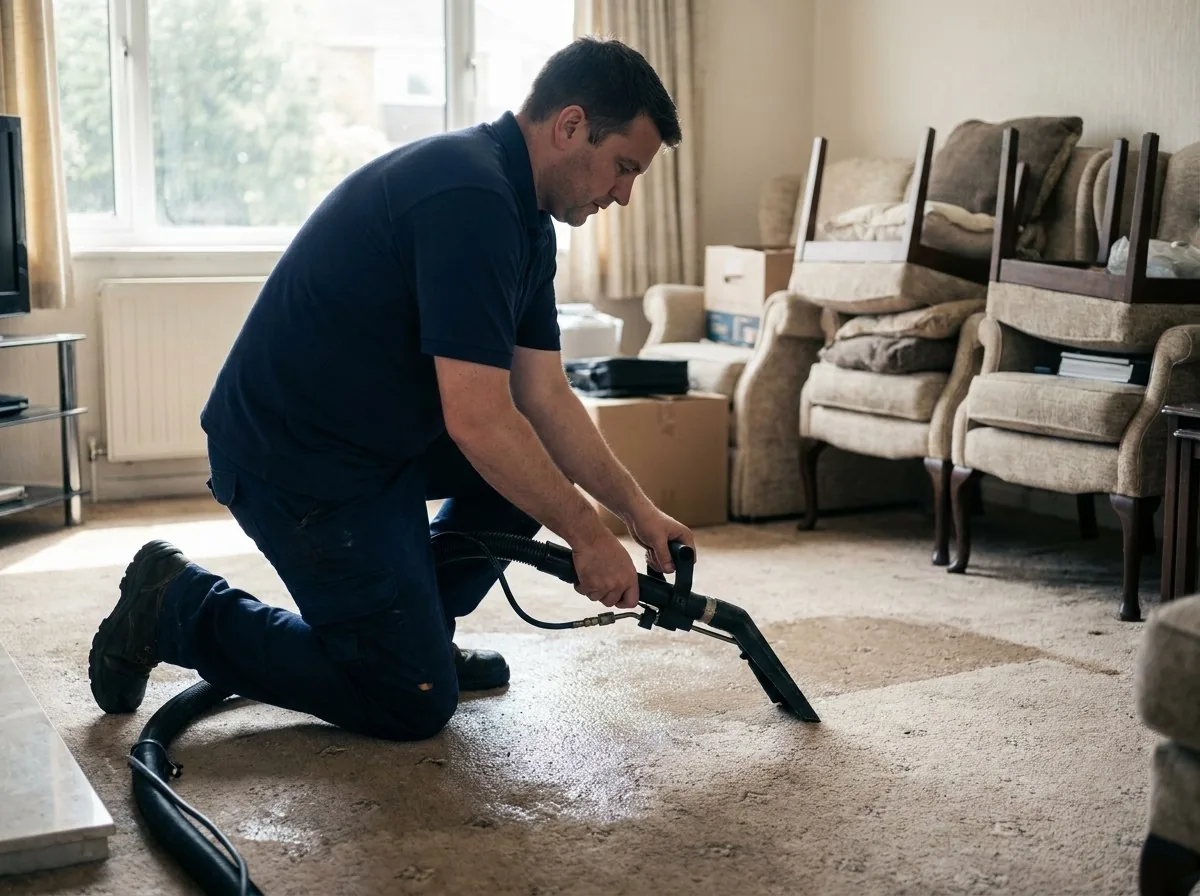
Look for swelling, staining, soft cabinet bases, damp toe-kicks, flooring changes, and musty odor—but do not rely on visible signs alone. Moisture can sit beneath cabinets and flooring.
Why this problem is easy to underestimate
Kitchen cabinets conceal the lowest part of a wall and floor, where water often travels first. A dishwasher or supply-line leak may spread under the cabinet run before appearing in the next room.
The material matters. Plywood, solid wood, particleboard, flooring underlayment, and drywall do not respond the same way to water.
What to check first
- Cabinet bases and toe-kicks for swelling or delamination.
- Flooring seams, transitions, and the adjacent room.
- The supply, drain, and appliance connections under or beside the cabinet.
What to do next
Stop the appliance or plumbing source if safe.
Remove the toe-kick only if it can be done without disturbing wet electrical or plumbing components.
Photograph the cabinet interior, floor, and adjacent wall.
Do not reinstall appliances or close the area before it is inspected.
When a professional assessment makes sense
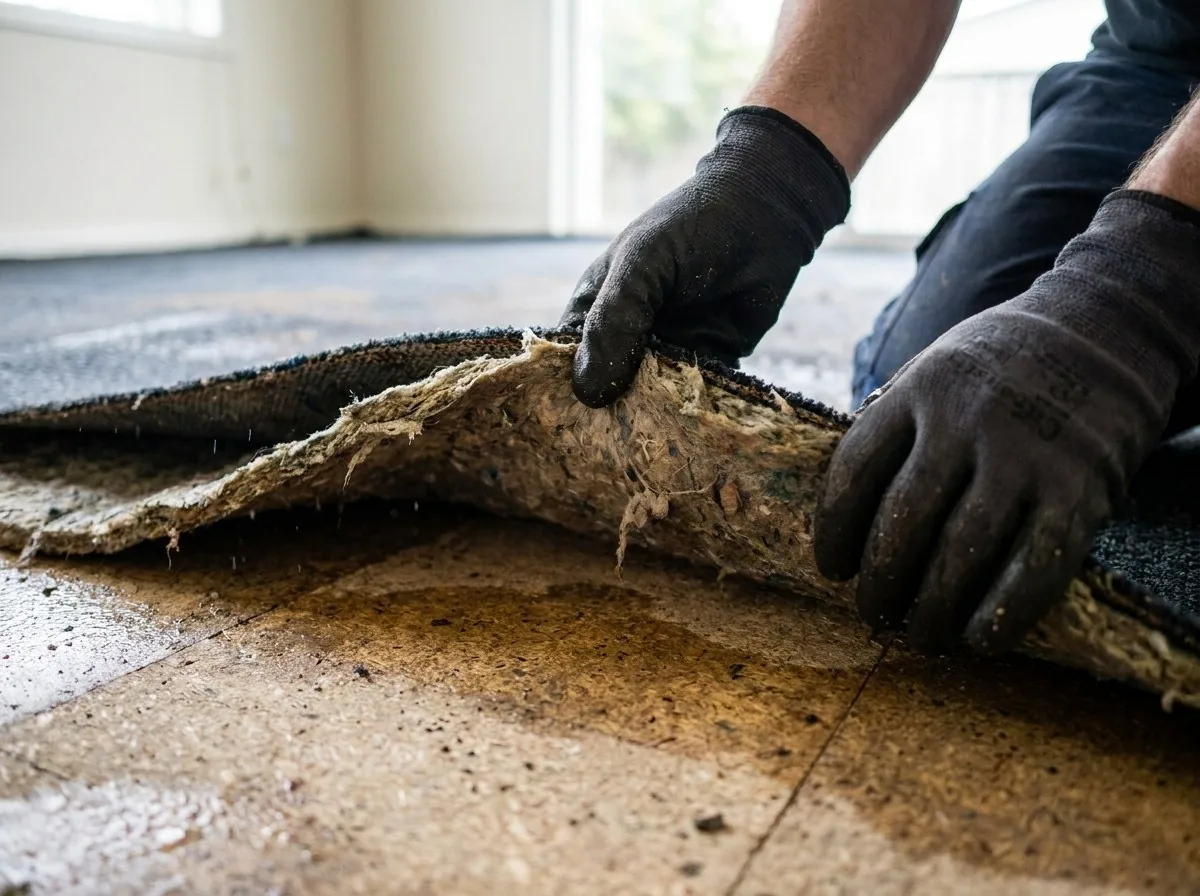
Call for a professional assessment when cabinets are swollen, flooring feels soft, water reached a wall cavity, or the leak continued long enough to create odor. Repairing the cabinet before drying can trap moisture.
Indianapolis-area context
Open-concept kitchen layouts in newer Central Indiana homes can let water travel into living areas quickly. Photograph the full path, not just the cabinet where the leak began.
Frequently Asked Questions
Solid wood or plywood may be salvageable; swollen particleboard and MDF often are not. The cause and exposure time still matter.
Not automatically. Get the source and moisture footprint assessed before demolition.
Stop the cycle and supply if safe, then check the cabinet base, flooring, and adjacent room; a visible puddle may not be the full damage.
Independent guidance
This page is general education, not insurance, legal, electrical, or medical advice. For safety and moisture-control background, see EPA mold and moisture guidance, EPA flood cleanup guidance, and CDC floodwater safety guidance.
Water is already affecting the property?
Use the emergency guide or call so the situation can be assessed before a small loss becomes a larger repair.