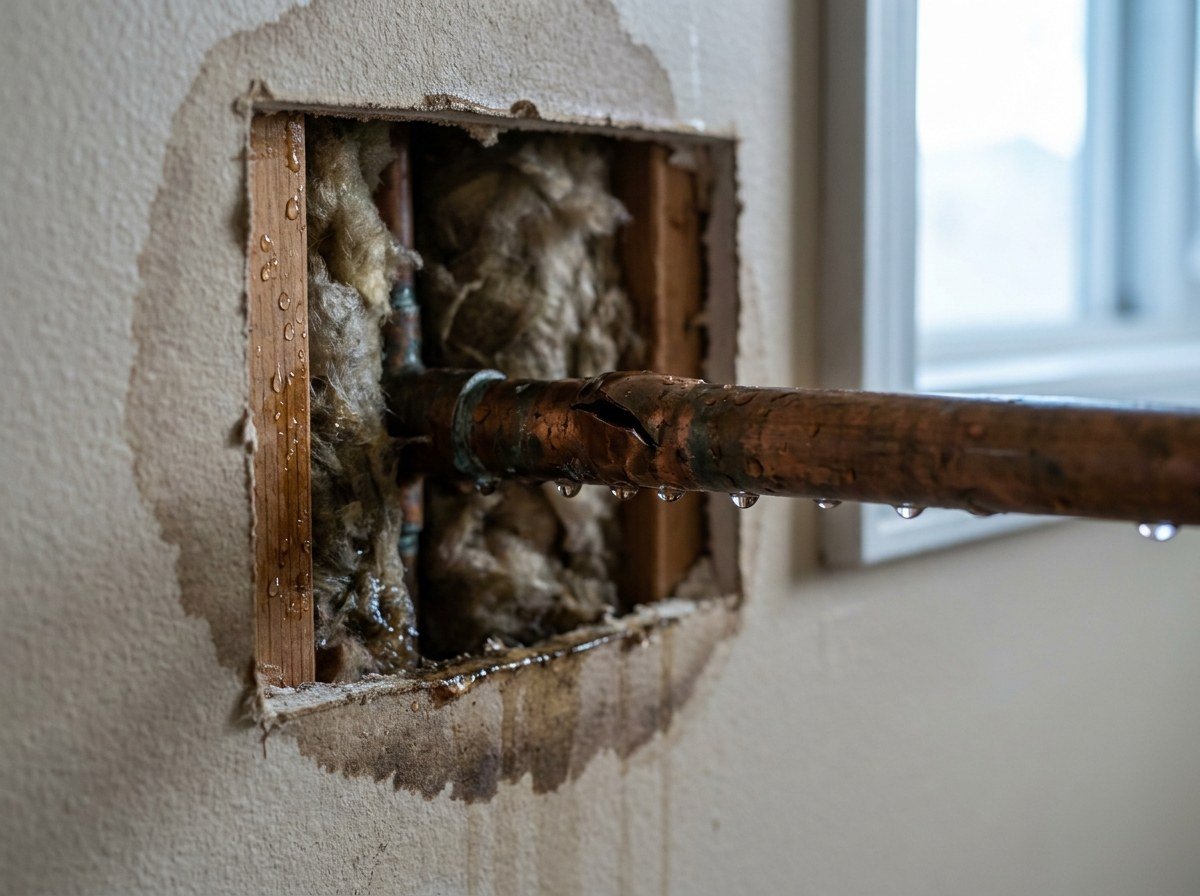
After a pipe bursts, shut off the water if you can do it safely, stay clear of wet electrical areas, document the damage, and begin only the cleanup steps that do not put you at risk. A local restoration professional can assess hidden moisture, extract water, and set a drying plan.
What should you do first after a pipe bursts?
- Stop the water. Close the fixture shutoff if it is easy to reach. If the break is larger or the fixture valve does not work, close the main water shutoff. If you cannot find it, call a plumber or emergency responder rather than guessing.
- Protect people from electrical hazards. Do not step into standing water near outlets, cords, appliances, or a panel. Never touch a breaker while standing on a wet surface. Leave the area and call for help if the safe shutoff point is not dry and accessible.
- Move what you can without walking through unsafe water. Lift small furniture, rugs, and boxes onto dry surfaces. Put foil or plastic under furniture legs only where you can do so without spreading contaminated water.
- Document before the scene changes. Take wide photos, close-ups, a short video, and notes about when you noticed the leak. Save the broken part if it can be kept safely. Keep receipts for temporary protection and emergency work.
- Start a controlled drying response. If the water is clean and the space is electrically safe, remove a small amount of surface water with towels or a wet vacuum made for that use. Do not use a household vacuum, run fans across sewage, or open a wall because you are curious.
When is a burst pipe an emergency?
A burst pipe needs urgent attention when water is still flowing, multiple rooms are wet, water has entered a wall or ceiling, insulation or flooring is saturated, or the loss is near electrical equipment. It is also urgent when the water source is not clearly clean. A supply-line break is different from a drain backup or floodwater intrusion, and the cleanup method changes with the water type.
In Central Indiana, cold snaps can turn a small freeze into a larger release when a frozen section thaws. That is why a quiet ceiling stain or damp baseboard still deserves an inspection after the visible water is gone. See our guide to frozen pipe water damage and the service page for burst and frozen pipe cleanup.
What should you photograph for an insurance claim?
Photograph the source if it is safe, every affected room, water lines on walls, damaged flooring, ceilings, cabinets, furniture, and personal property. Record model numbers and serial numbers for appliances. Write down the date, approximate time, weather if relevant, and the actions you took to prevent more damage. Do not throw away damaged items before asking the insurer how they want them handled.
Indiana Department of Insurance guidance says temporary repairs may help prevent more damage, while permanent repairs before inspection can create claim problems. Review the policy and ask the carrier what it needs. Our water damage documentation checklist can help you organize the file.
What can wait until a professional arrives?
Moving light belongings, blotting clean surface water, and opening interior doors may be reasonable when the area is safe. Pulling up flooring, cutting drywall, disconnecting appliances, climbing into a ceiling cavity, or using fans in contaminated water is a different matter. Those actions can spread damage or create a safety problem.
The goal in the first hour is not to make the home look normal. It is to stop the source, keep people safe, preserve evidence, and give the next professional an accurate picture of what happened.
Frequently asked questions
Yes, if the shutoff is accessible and dry. If reaching it requires standing in water or approaching an electrical panel, leave the area and call for help.
Only when the water is clean, the electrical area is safe, and the equipment is appropriate. Do not use household fans or vacuums around contaminated water or wet electrical components.
Sources and further reading
Indiana Department of Insurance: Insurance Claim Tips — temporary versus permanent repairs and documentation.
U.S. EPA: A Brief Guide to Mold, Moisture and Your Home — why prompt drying matters.