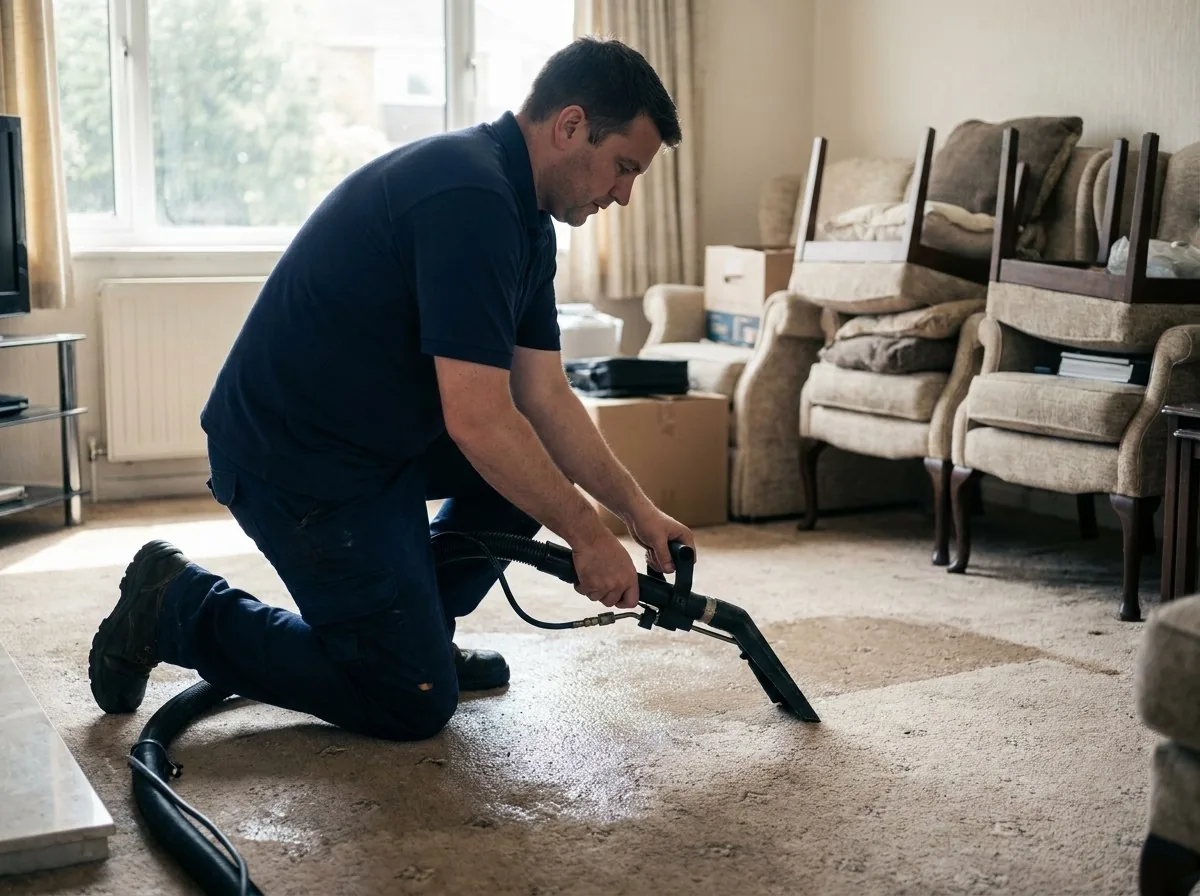
Crawl Space Water Damage Cleanup: Dry the Space and Protect the House Above
Crawl-space moisture is easy to ignore because it is out of sight, but wet insulation, wood, and soil can affect floors, odors, indoor humidity, and air quality above.
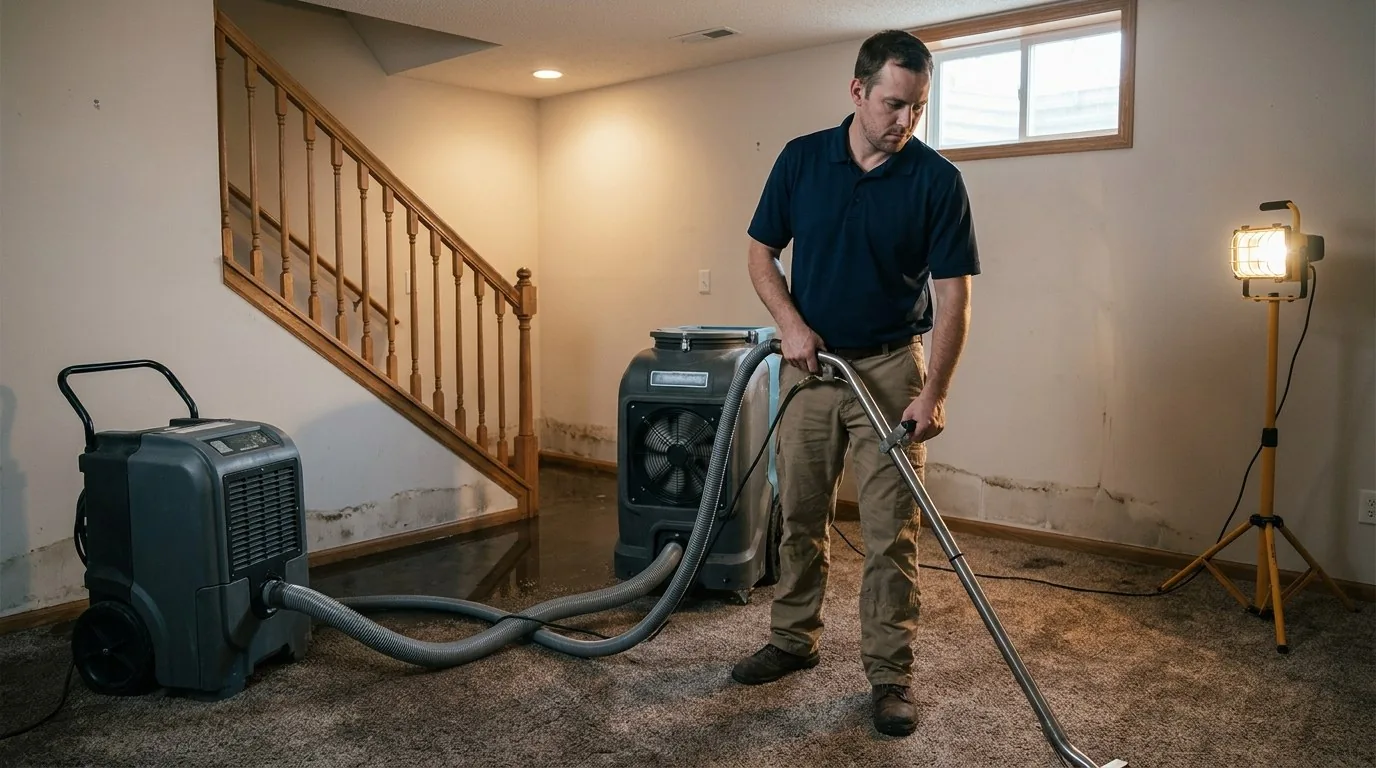
What to do when standing water, damp insulation, or a musty smell coming from a crawl space
Keep children and pets out, do not enter if water is near electrical equipment, and identify whether the water came from groundwater, a plumbing line, condensation, or a failed drain.
Do not crawl through contaminated water or disturb visible mold without appropriate protection. A crawl space may contain sharp debris, low-clearance hazards, and electrical risks.
What a responder will look for
The assessment should connect the crawl space to the rooms above rather than treating it as a sealed box.
Entry point
The source may be foundation seepage, a plumbing break, a downspout problem, or a disconnected drain.
Materials below
Insulation, vapor barriers, wood framing, and stored belongings each respond differently to water.
Air and odor
Moisture can migrate upward, making a lower-level smell the first clue that the space is still damp.
Steps that protect people and property
- Keep the access door closed until the space is assessed.
- Stop the plumbing source if it is clearly identified and safe to reach.
- Remove only loose, easily accessible items; do not disturb wet insulation or suspected sewage.
- Record the date, source, depth, and areas of the home where odors or floor changes appear.
Central Indiana crawl spaces can see moisture from heavy rain, saturated soil, and plumbing failures. If a floor feels cool or damp above the crawl space, report that detail during the assessment.
From first call to a dry, documented property
Map moisture
Readings are taken in the crawl space and in floor systems above it.
Remove unsalvageable materials
Wet insulation and contaminated porous materials may need removal rather than surface drying.
Dry and clean
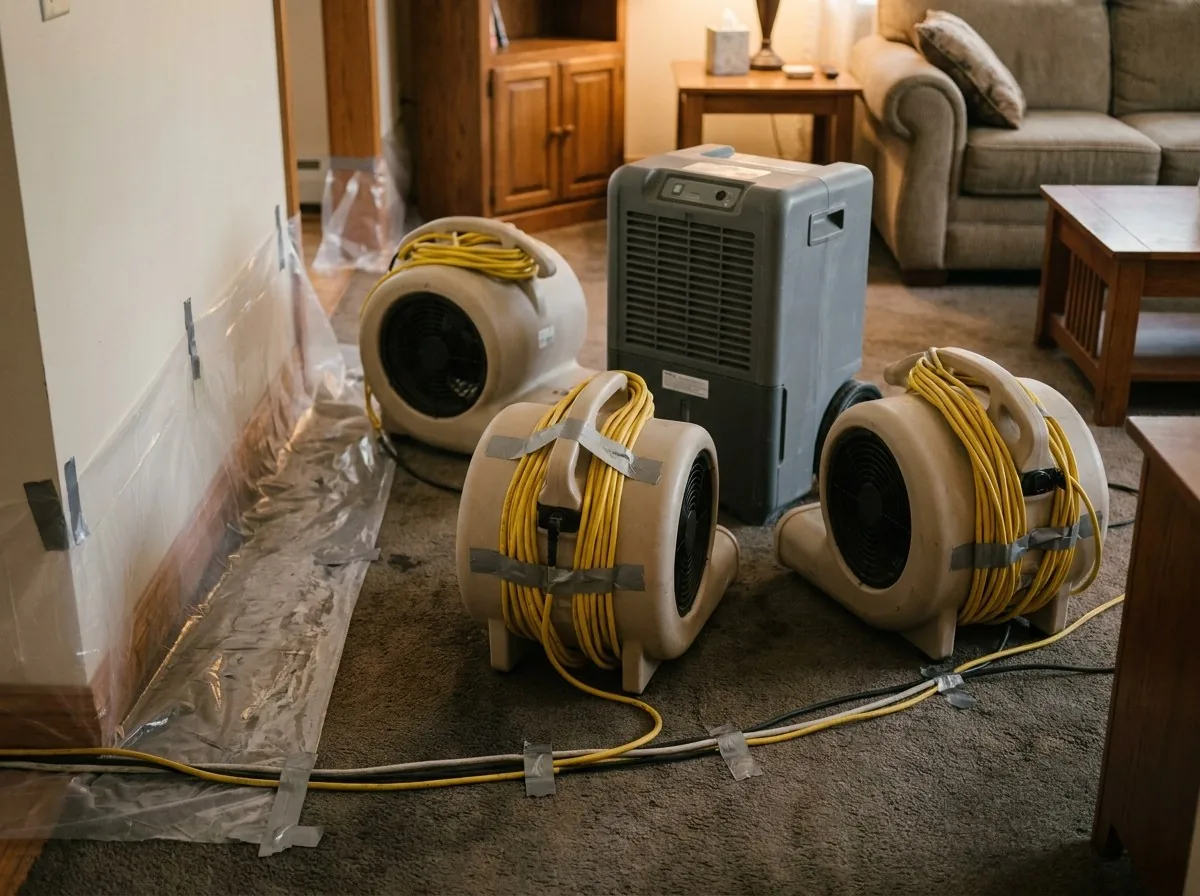
Controlled air movement and dehumidification reduce moisture without spreading contamination through the home.
Prevent recurrence
Drainage, grading, gutters, plumbing, and vapor-control issues are separated so the right trade can address each one.
Frequently Asked Questions
A household fan may move air but usually cannot control moisture in a confined space. Drying is more reliable when the source is fixed and humidity is measured.
Often, especially if it is contaminated, compressed, or unable to dry fully. The material and the type of water determine the decision.
Wood, insulation, soil, and stored materials can hold moisture. The odor can persist until the source is fixed and the space is cleaned and dried.
Independent guidance
This page is general education, not insurance, legal, electrical, or medical advice. For safety and moisture-control background, see EPA mold and moisture guidance, EPA flood cleanup guidance, and CDC floodwater safety guidance.
Need a clear next step?
Tell us what happened and we'll route your request to a local restoration professional who can assess the damage.