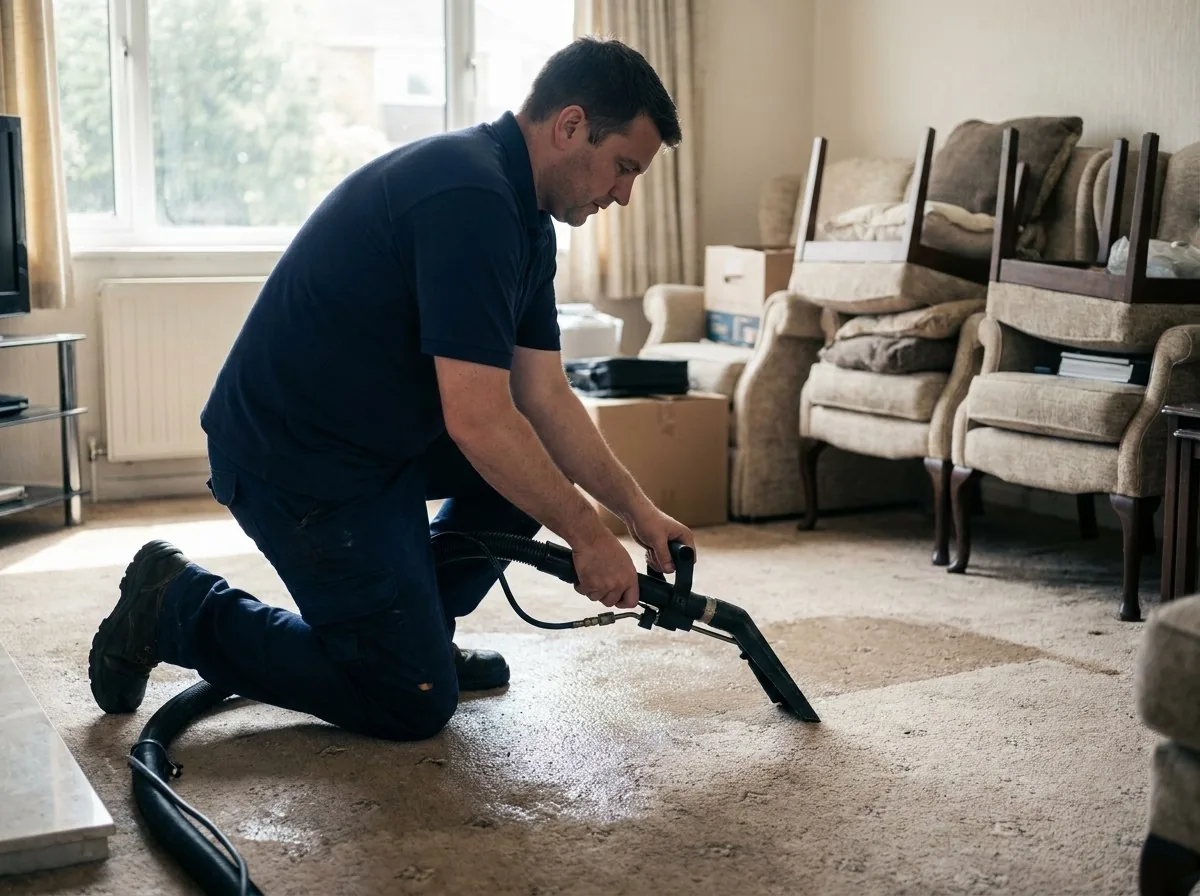
Office Water Damage Restoration: Protect the Workplace and Limit Downtime
Office water damage affects more than walls and floors. It can disrupt employees, equipment, records, tenants, security, and the ability to open the business safely.
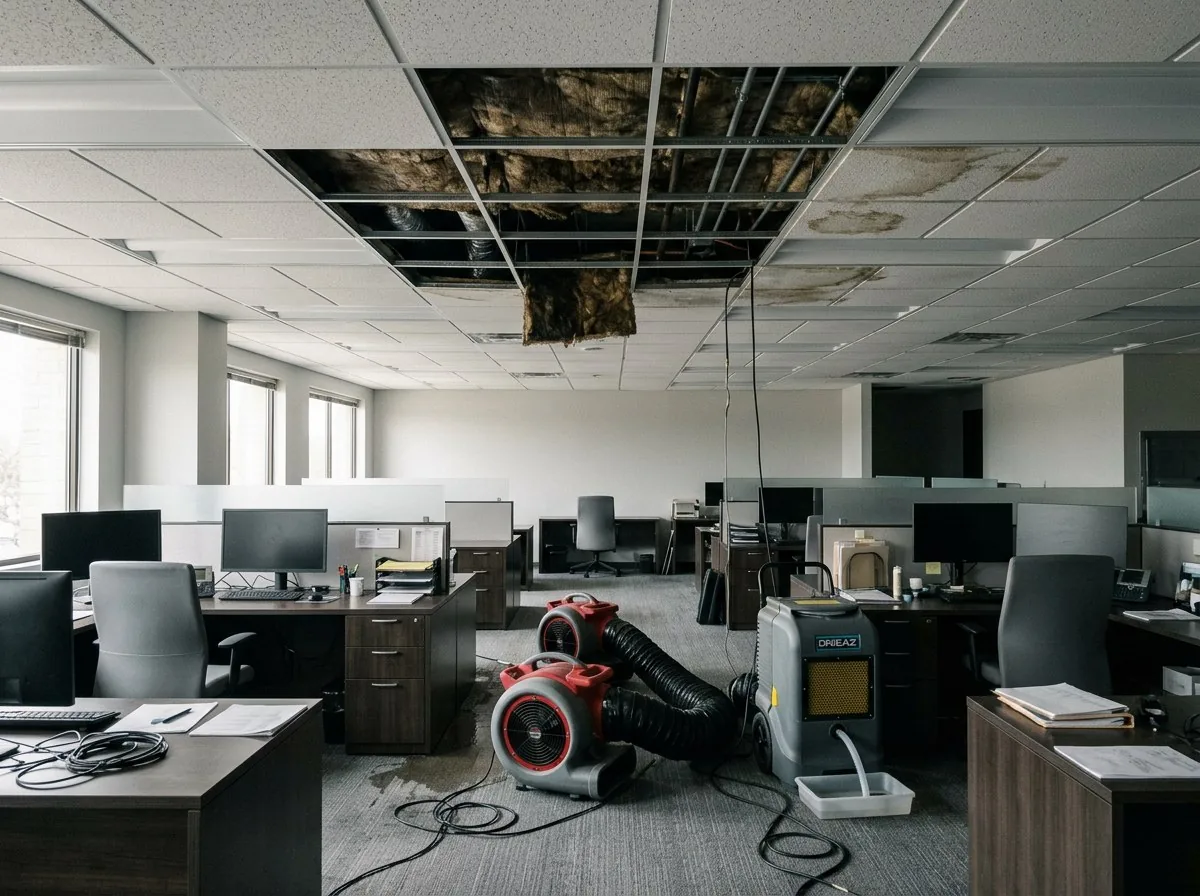
What to do when an office has a leak, ceiling failure, sprinkler discharge, or water intrusion
Secure the area, notify the building contact, protect sensitive records only when safe, and create a simple room-by-room impact list. The response plan should balance extraction with business continuity.
Do not power up wet electronics, enter unsafe ceiling areas, or move heavy equipment through standing water.
What a responder will look for
The assessment identifies the source, occupancy constraints, critical equipment, contents, and the areas that must stay operational.
Business impact
Which rooms, systems, and teams are affected determines the order of work.
Critical contents
Servers, records, inventory, and sensitive equipment need separate handling decisions.
Access plan
Work can be staged around tenants, staff, security, and building rules.
Steps that protect people and property
- Notify the building manager and emergency contact.
- Keep employees out of wet or electrically unsafe rooms.
- Photograph affected ceilings, floors, equipment, and records.
- Record the last known normal condition and any operational interruption.
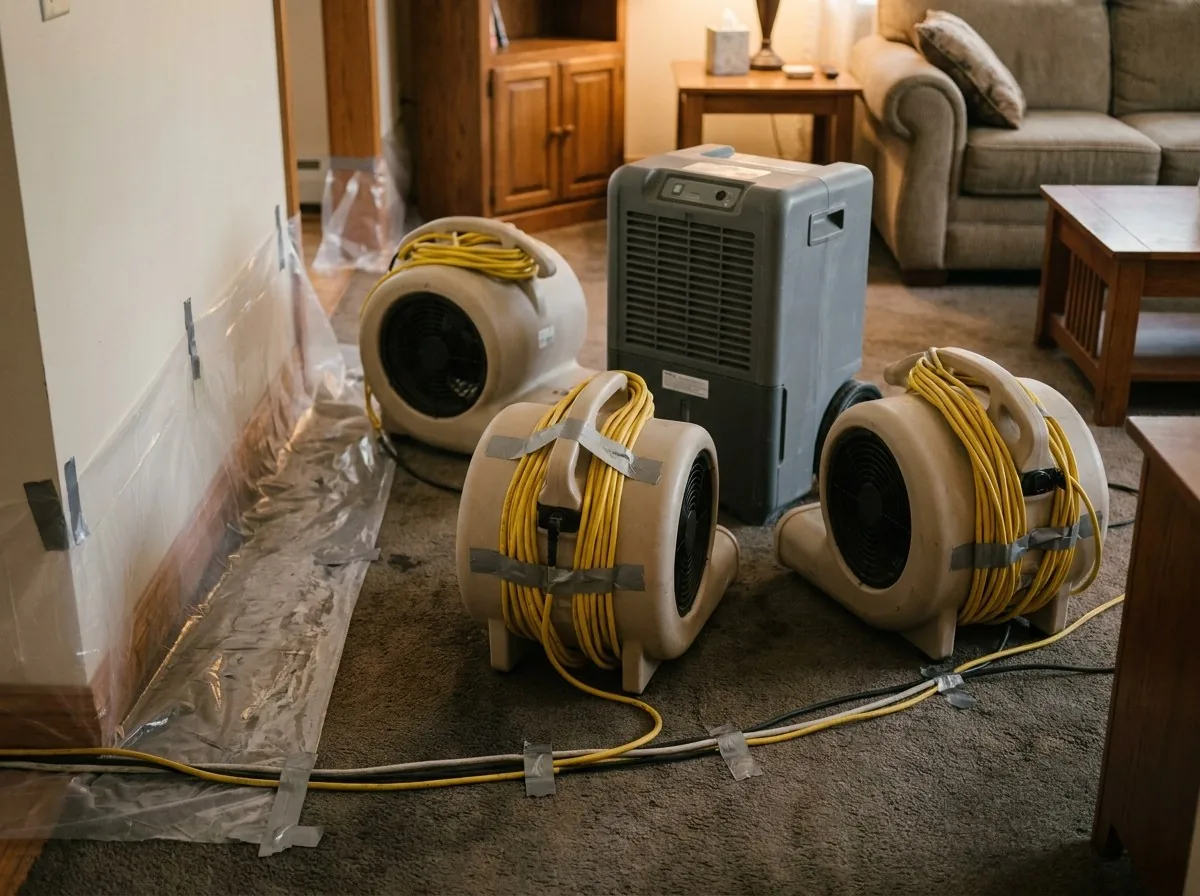
Downtown Indianapolis offices, suburban suites, and multi-tenant buildings may have shared ceilings and mechanical systems. A written response plan reduces confusion when several parties need access.
From first call to a dry, documented property
Stabilize
The source is stopped and safe access is set.
Prioritize
Critical rooms and contents are separated from lower-priority areas.
Dry
Equipment and access are staged around business needs.
Reopen
The owner confirms that affected areas are safe and sufficiently dry for use.
Frequently Asked Questions
As soon as practical, especially when water reached electrical systems, servers, records, or occupied areas.
Only when the water is clean, the area is safe, and the materials are limited. Wet electrical equipment, contaminated water, and hidden cavities need qualified help.
Document the source, date, rooms, equipment, inventory, records, work interruption, vendors contacted, and all emergency expenses.
Independent guidance
This page is general education, not insurance, legal, electrical, or medical advice. For safety and moisture-control background, see EPA mold and moisture guidance, EPA flood cleanup guidance, and CDC floodwater safety guidance.
Need a clear next step?
Tell us what happened and we'll route your request to a local restoration professional who can assess the damage.