Business Continuity After an Office Water Loss
Create a safe boundary, identify critical rooms and records, and coordinate drying around the business functions that must continue.
Published August 25, 2026 · Updated October 6, 2026 · General education for Indianapolis-area property owners
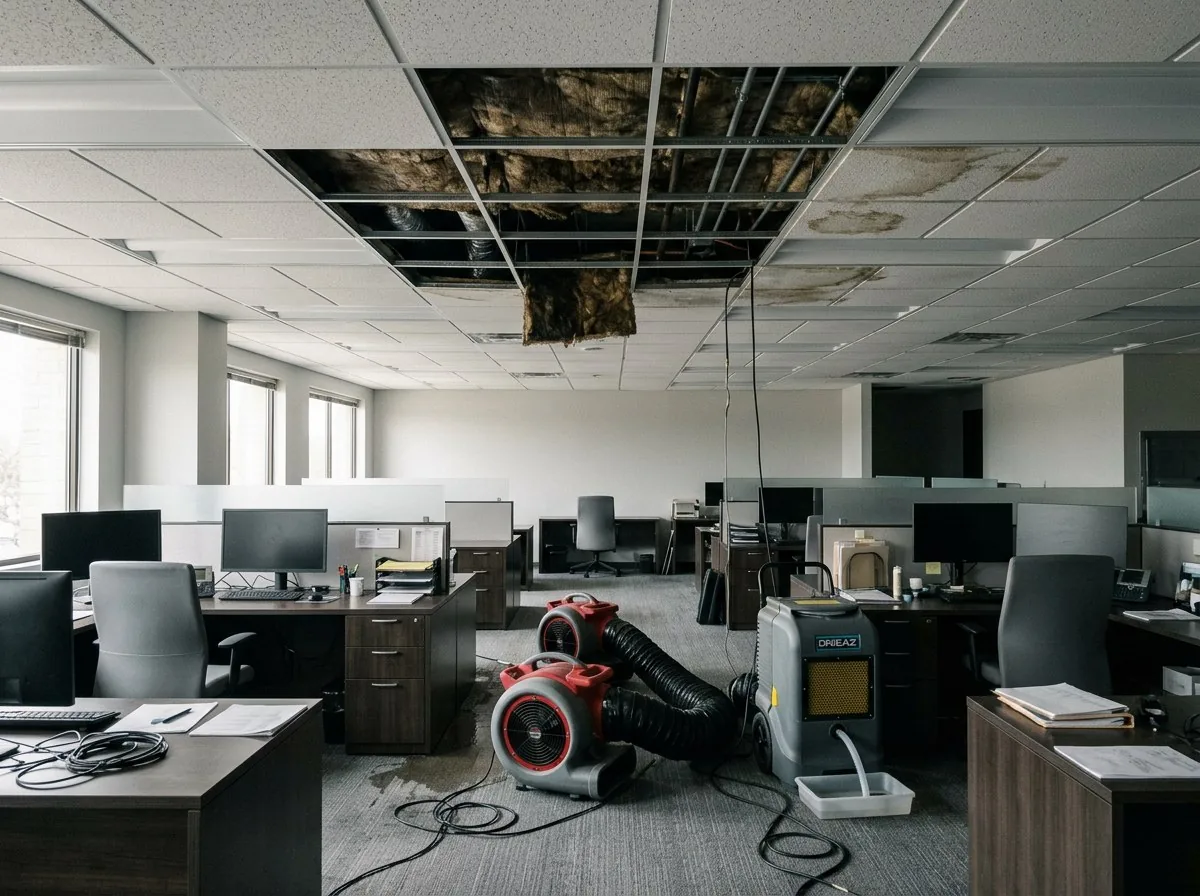
Create a safe boundary, identify critical rooms and records, and coordinate drying around the business functions that must continue.
Why this problem is easy to underestimate
Business continuity starts with a safe operating plan, not just faster extraction. Separate what must stay open from what must stay untouched.
Wet servers, records, electronics, and occupied areas can create different priorities from drywall and flooring.
What to check first
- Critical systems and records.
- Employees, visitors, tenants, and access restrictions.
- Work areas that can be relocated temporarily.
What to do next
Notify building management and the emergency contact.
Protect records only when safe.
Photograph damage and operational impact.
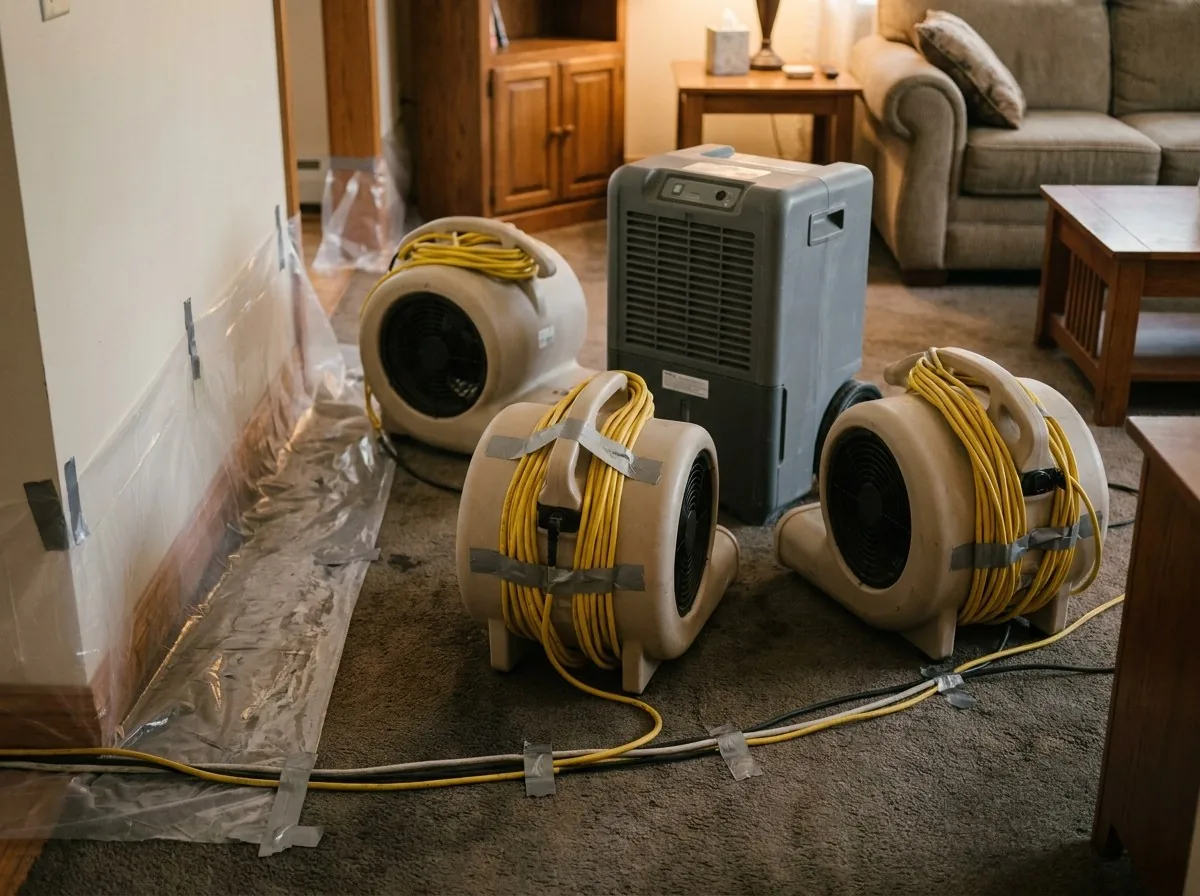
Ask for a staged drying and access plan.
When a professional assessment makes sense
Commercial restoration should include a clear scope, schedule, and communication point.
Indianapolis offices may share buildings with other tenants, so building rules and elevator access can affect the timeline.
Frequently Asked Questions
Sometimes, if unaffected areas are safe and access is controlled.
Source, rooms, equipment, records, downtime, expenses, and communications.
Use the building emergency plan and request qualified restoration help.
Independent guidance
This page is general education, not insurance, legal, electrical, or medical advice. For safety and moisture-control background, see EPA mold and moisture guidance, EPA flood cleanup guidance, and CDC floodwater safety guidance.
Water is already affecting the property?
Use the emergency guide or call so the situation can be assessed before a small loss becomes a larger repair.