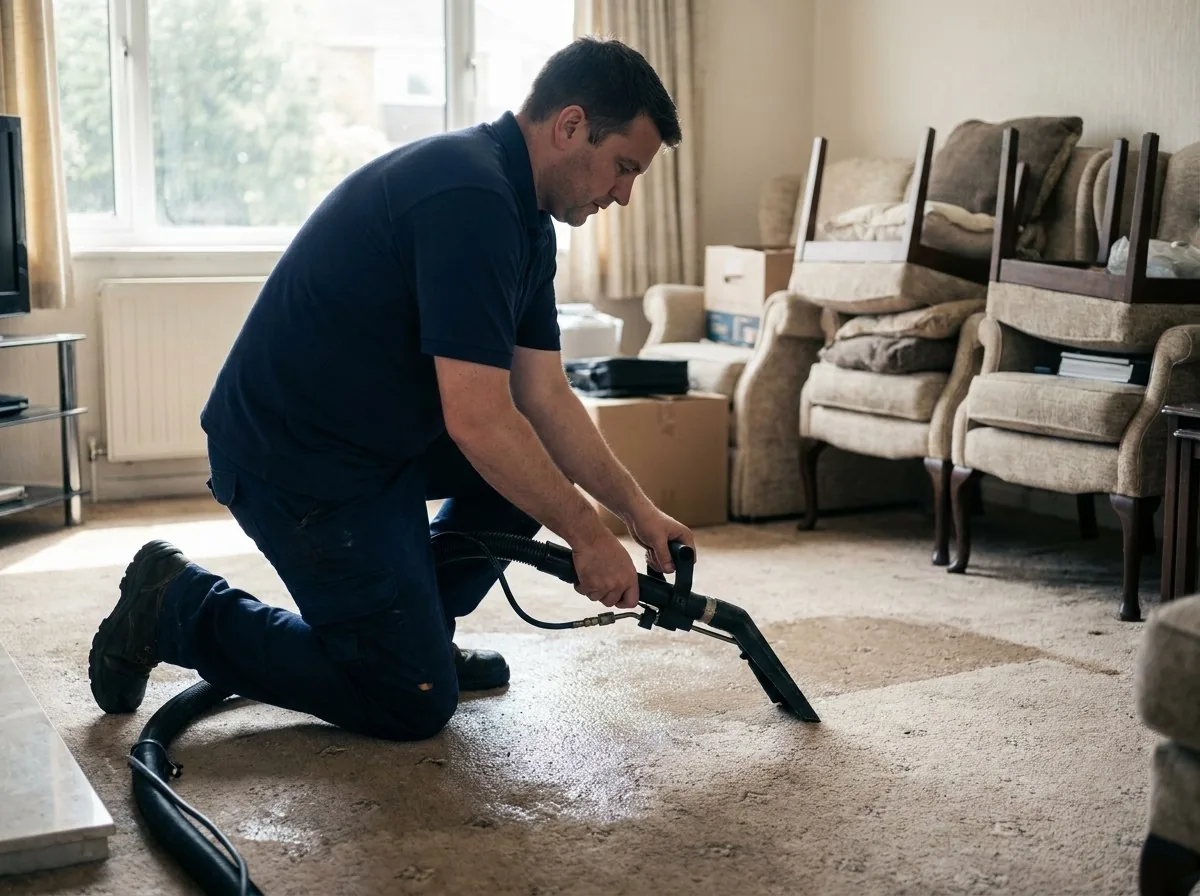
Water Heater Leak Cleanup: Protect Flooring, Walls, and Mechanical Areas
A leaking water heater can release water slowly for days or empty a tank quickly. The visible puddle is only part of the problem; water can move under flooring, into drywall, and around the furnace or electrical equipment.
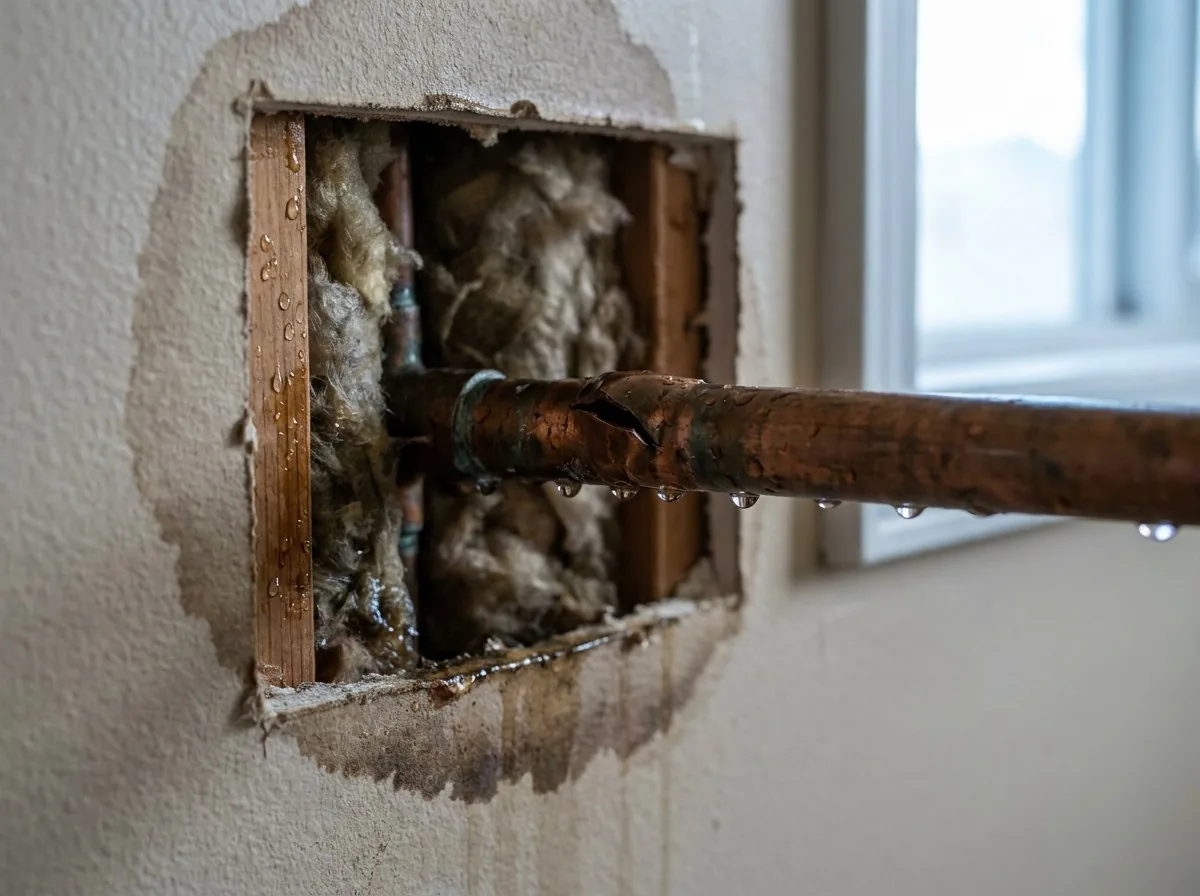
What to do when a leaking or burst water heater in a basement, garage, utility room, or closet
If it is safe, shut off the water supply and fuel or power source according to the equipment instructions. Then keep people away from wet electrical equipment and document what happened.
Do not touch a breaker, gas control, or appliance that is wet. If you are unsure what is safe to shut off, wait for qualified help.
What a responder will look for
The responder checks the tank, pan, nearby walls and flooring, and any mechanical or electrical equipment exposed to water.
Source control
The water supply and the failed tank, valve, pan, or connector are identified before drying begins.
Hidden spread
Moisture can travel beneath finished floors and into baseboards or drywall around the utility area.
Mechanical safety
Furnaces, outlets, panels, and stored chemicals may change the safe work area.
Steps that protect people and property
- Keep the area clear and avoid wet electrical equipment.
- If safe and known, close the cold-water supply valve to the tank.
- Take photos of the tank, fittings, water line, flooring, and nearby equipment.
- Move only lightweight belongings out of the wet area; do not drag heavy items across saturated floors.
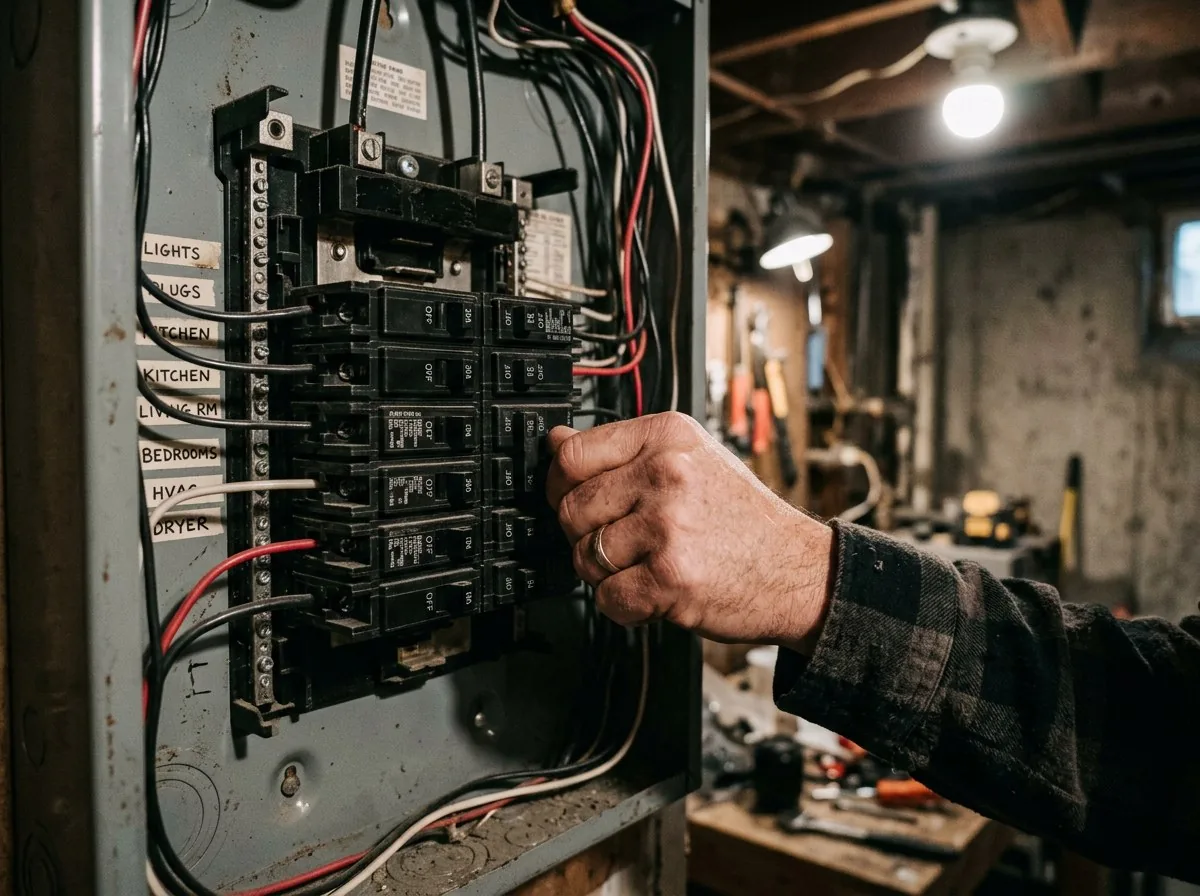
Basements and utility closets in Central Indiana often combine water, electrical equipment, and stored belongings. Treat the mechanical area as a safety zone first and a cleanup zone second.
From first call to a dry, documented property
Shut down and assess
The source is stopped and the safe work zone is established.
Extract and protect
Water is removed while unaffected areas and belongings are protected.
Monitor drying
Moisture readings show whether flooring, drywall, and framing are improving.
Plan repairs
Tank replacement, plumbing work, and reconstruction are sequenced to avoid rewetting finished materials.
Frequently Asked Questions
If the equipment is wet or you are unsure, do not touch it. A qualified professional can make the equipment safe and coordinate the plumbing shutoff.
Sometimes, but it depends on the flooring assembly, how long it was wet, and whether water traveled beneath the finish. Moisture readings are more useful than appearance alone.
Policies often distinguish the failed appliance from the resulting sudden water damage. Coverage depends on the policy and the cause, so document the event and ask your insurer.
Independent guidance
This page is general education, not insurance, legal, electrical, or medical advice. For safety and moisture-control background, see EPA mold and moisture guidance, EPA flood cleanup guidance, and CDC floodwater safety guidance.
Need a clear next step?
Tell us what happened and we'll route your request to a local restoration professional who can assess the damage.