Water Damage Under Laminate or Vinyl Flooring: What the Surface Hides
A dry-looking laminate or vinyl surface can still cover wet underlayment or subfloor; check edges, seams, transitions, and the room below before deciding on replacement.
Published August 25, 2026 · Updated October 6, 2026 · General education for Indianapolis-area property owners
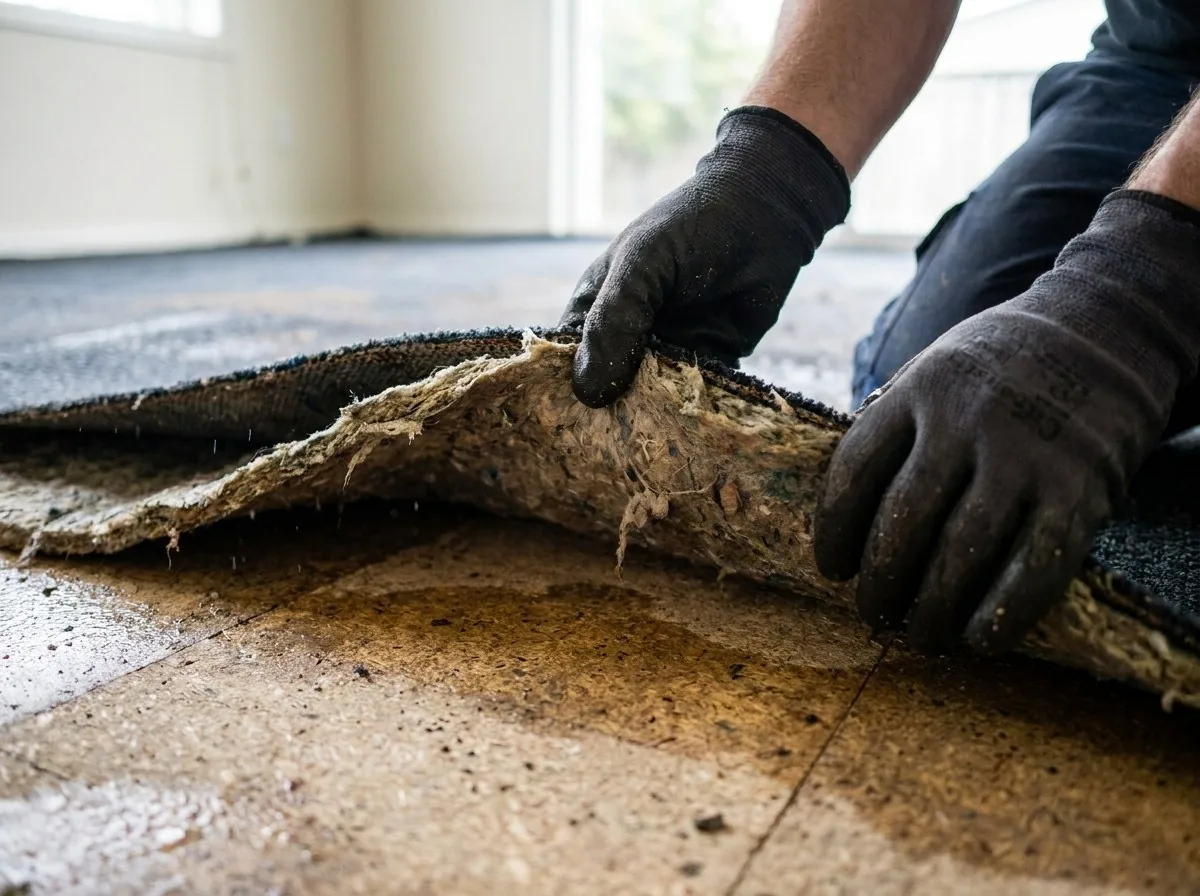
A dry-looking laminate or vinyl surface can still cover wet underlayment or subfloor; check edges, seams, transitions, and the room below before deciding on replacement.
Why this problem is easy to underestimate
Floating floors and glued finishes can hide water at seams and edges. Moisture readings and a look at the underlayment are more reliable than appearance.
Water may travel under a long run of flooring and show up at a wall far from the source.
What to check first
- Swollen seams, lifting edges, soft spots, or odor.
- Baseboards and transitions.
- The material beneath the finish.
What to do next
Stop the source.
Limit traffic.
Photograph seams and room edges.
Do not glue, nail, or repaint over movement.
When a professional assessment makes sense
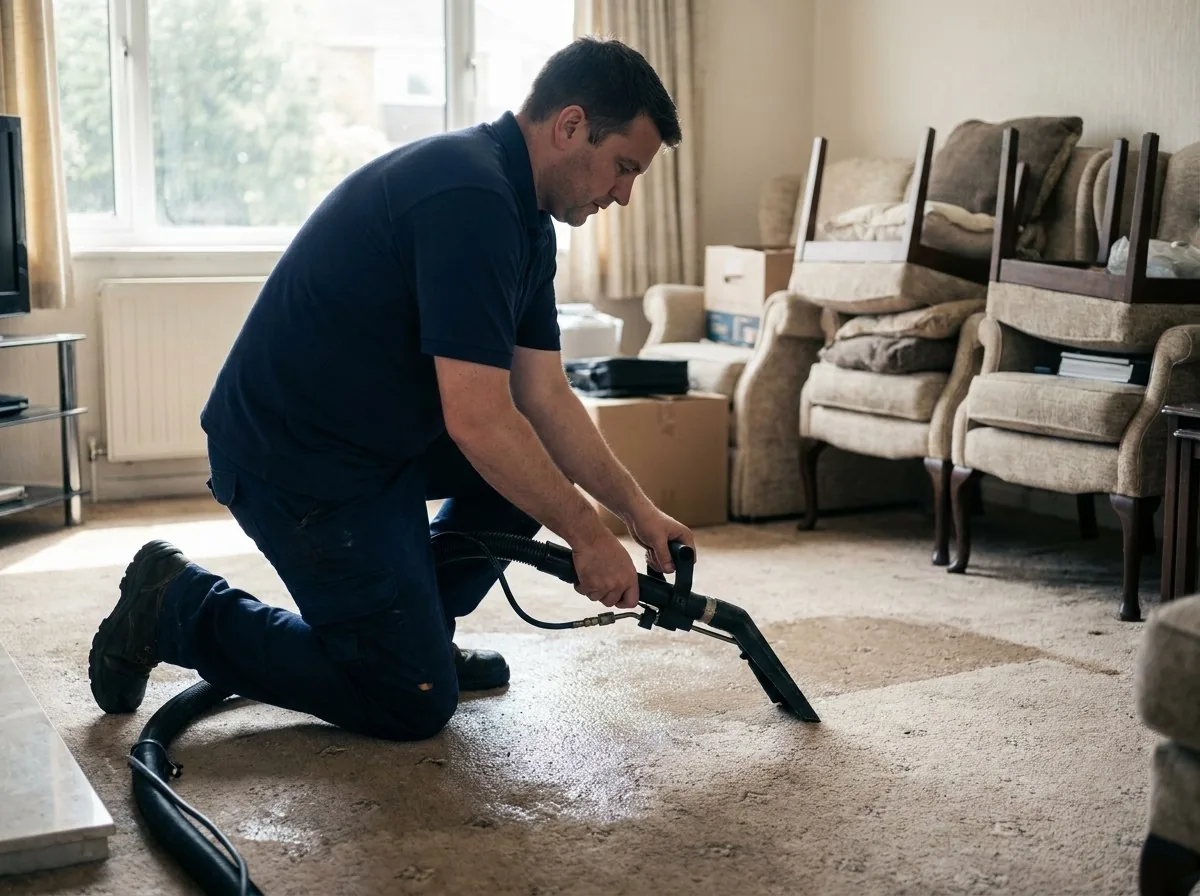
Request assessment if flooring feels soft or moisture persists.
Slab, crawl-space, and wood-subfloor homes dry differently.
Frequently Asked Questions
Sometimes, but the underlayment and edges often determine the outcome.
Not automatically; map the moisture first.
Water can collect at edges and under the finish.
Independent guidance
This page is general education, not insurance, legal, electrical, or medical advice. For safety and moisture-control background, see EPA mold and moisture guidance, EPA flood cleanup guidance, and CDC floodwater safety guidance.
Water is already affecting the property?
Use the emergency guide or call so the situation can be assessed before a small loss becomes a larger repair.