HVAC Condensate Line Water Damage: Why It Happens and What to Check
How a clogged or disconnected HVAC condensate line can wet ceilings, closets, floors, and surrounding building materials.
Published and updated August 25, 2026 · General education for Indianapolis-area property owners
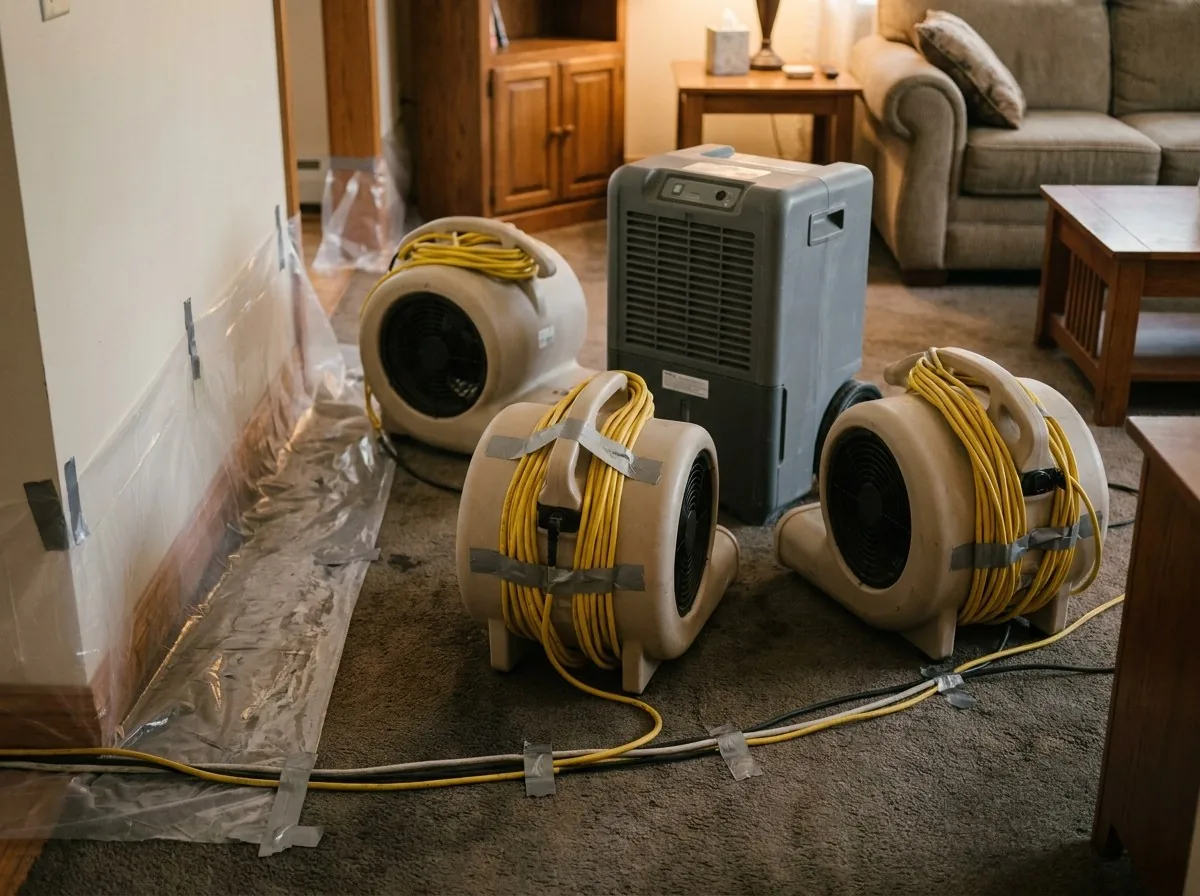
A condensate overflow pan, clogged drain, disconnected line, or frozen coil can release water near an air handler. Stop the equipment if it is safe, protect the area, and have the HVAC source and building moisture assessed.
Why this problem is easy to underestimate
Condensate water often appears during warm, humid weather and may be mistaken for a roof or plumbing leak. Because HVAC equipment can sit in an attic, closet, or ceiling cavity, the water path may be hidden.
The equipment source needs HVAC attention, while wet drywall, insulation, flooring, and framing may need restoration assessment.
What to check first
- The pan, drain line, trap, and area beneath the air handler.
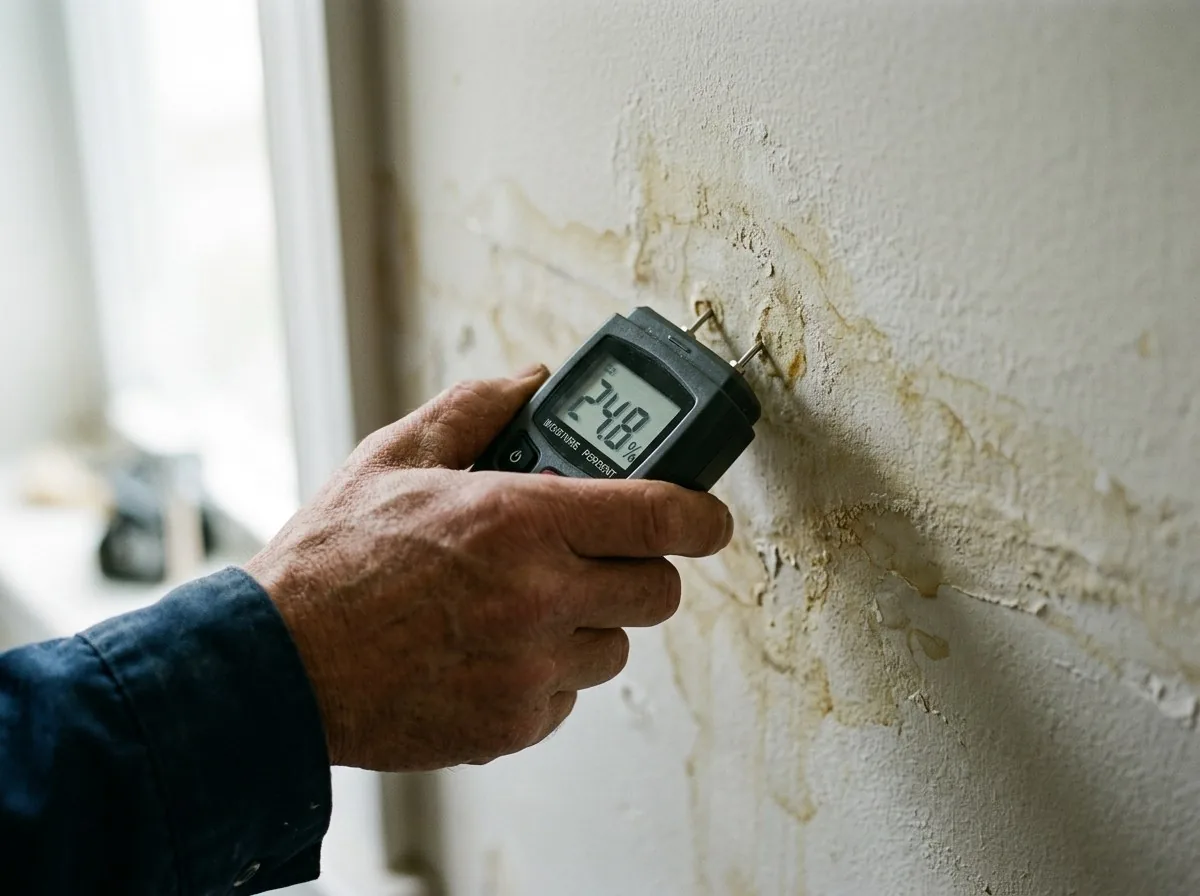
- Ceiling stains, closet flooring, insulation, and adjacent walls.
- Whether the system was running, frozen, recently serviced, or showing reduced cooling.
What to do next
Turn off the system only if safe and according to the equipment instructions.
Keep clear of wet electrical components near the air handler.
Photograph the unit, drain path, stain, and any wet materials.
Call HVAC and restoration help when water entered a cavity or finished area.
When a professional assessment makes sense
A professional assessment is useful when the leak is recurring, the drain is concealed, or the ceiling and insulation were affected. Repainting without correcting the condensate source invites repeat damage.
Indianapolis-area context
Indiana humidity can increase HVAC condensate loads during summer. Ask the HVAC technician to explain the drain path and the restoration responder to check the cavity below it.
Frequently Asked Questions
Do not keep operating equipment that is actively leaking or near wet electrical components. Have the source checked.
It may be less contaminated than sewage, but it can still support microbial growth and may pick up dust or building contaminants.
The source may still be active or the ceiling cavity may retain moisture. Fix and verify before painting.
Independent guidance
This page is general education, not insurance, legal, electrical, or medical advice. For safety and moisture-control background, see EPA mold and moisture guidance, EPA flood cleanup guidance, and CDC floodwater safety guidance.
Water is already affecting the property?
Use the emergency guide or call so the situation can be assessed before a small loss becomes a larger repair.