A sewer backup may require a wastewater utility report, a plumber to investigate the private line, and a qualified provider to clean contaminated building materials. If you rent, notify emergency maintenance. Confirm the wastewater provider for your address. A utility report does not arrange interior cleanup or establish who pays.
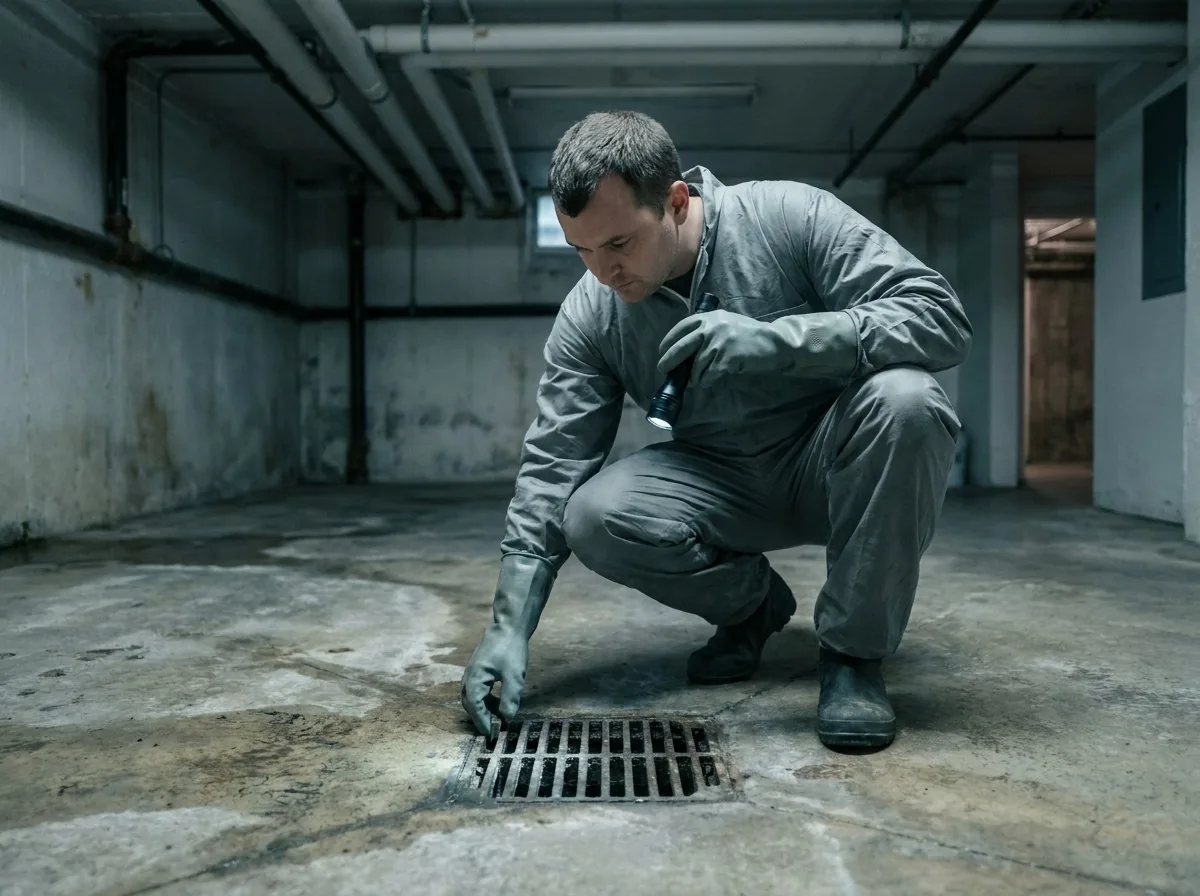
Keep people away before investigating the drain
Keep children and pets out of the affected area. Do not enter standing water near electrical equipment or use a household vacuum to remove it. Report the location and what you can observe from a safe place. If there is immediate danger to people, call emergency services.
EPA’s flood cleanup guidance explains that contaminated water can present health and electrical hazards. Tell the cleanup provider that sewage may be involved so it can assess the appropriate response. Water color or smell alone is not a safe basis for treating a backup as clean water.
The public sewer and the private lateral have different roles
For properties served by Citizens Energy Group, its sewer service-line guidance states that the property owner maintains the sanitary sewer lateral from the home to its connection at the main. The page also identifies permitting and contractor requirements for lateral construction. That explains why a utility report and a private-line investigation may both be relevant.
It does not establish the cause of your backup or fault for damage. Confirm your wastewater provider using your bill or account; not every Central Indiana address has the same provider. For Citizens customers, use the official Citizens Energy Group website to find current contact and service-reporting options rather than an unverified number from a directory.
Which call addresses which part of the problem?
| Contact | What to report or ask | What not to assume |
|---|---|---|
| Emergency maintenance or manager | Unit, room, active backup, shared-space impact, and access needs | The tenant can authorize building or lateral work |
| Wastewater provider | Address, start time, affected fixtures, and any nearby observed overflow | A report confirms a public-system cause |
| Plumber or sewer contractor | Private-line investigation, findings, and repair or maintenance scope | Opening the drain also cleans the building |
| Cleanup provider | Suspected contamination, affected rooms, materials, and belongings | The cleanup provider will repair the sewer line |
| Insurer | Policy provisions, required records, and any applicable endorsement | A backup is automatically covered |
Prepare one factual report for each contact
Record the time you noticed the backup, which fixture or drain was affected, whether water is still entering, and which rooms or belongings are affected. Note rain or other observations without treating them as the confirmed cause. If management or a utility gives you a reference number, keep it with the time of the call.
Do not repeatedly operate fixtures to see what happens. Tell the plumber what you already observed and follow instructions about whether water use should stop. If a neighboring unit or shared room appears affected, tell management so it can arrange access; do not enter another space to investigate.
Get the line findings and cleanup scope in writing
Ask the investigating provider to identify the location and nature of the problem, the work performed, and anything still unresolved. If a camera inspection was used, ask what record is available and what the finding means. A cleared obstruction and a completed structural repair are different outcomes.
Then ask the cleanup provider which materials require cleaning, removal, or drying and how access will be controlled. Keep the plumbing records alongside the damage documentation. Those records help coordinate the work; they are not a decision on legal responsibility or insurance coverage.
When the drain works again but the room is still affected
Do not treat drainage recovery as the end of the building response. Ask about affected flooring layers, wall bases, cabinets, and belongings. A cleanup scope should address the actual water and materials involved, including contaminated areas that are no longer visibly wet.
For background on identifying the event, read our sewer backup versus stormwater guide. For the next cleanup decision, see sewage backup cleanup or request a local restoration referral. IndyWaterHelp is independent of the utility and does not repair sewers or perform cleanup itself.
Sources and editorial limits
- Citizens Energy Group: sewer lateral responsibilities and work requirements
- EPA: contaminated floodwater cleanup precautions
This guide combines the cited guidance with practical questions and record templates. It is not a site inspection, a contractor credential claim, or a determination of coverage or legal responsibility. IndyWaterHelp is an independent information and referral resource.